Showing posts with label Gefen Publishing. Show all posts

Monday, October 2, 2023

The Beauty of Israel

I cannot help but wonder at the irony of my blog when Israel is being attacked on all sides by her enemies. But I think this is an important post. We in Israel basically want to live in peace and enjoy our beautiful homeland.

 Jewish librarians have lamented that there are very few books for children about Israel that are just positive, good books -- no politics, no agenda. This season, there are three excellent children's books and a "coffee table book" that highlight the beauty of Israel, its diverse plants and animals and their ecosystems, and the wonder and miracle that is the Land of Israel.


Hava Divon's Barefoot in the Sand (Green Bean Books, 2023) is a story about making dreams come true. From the time he was a boy and heard stories about an amazing place, Saul longed to go to the Land of Israel and put his bare feet in the sand. When he grows up, he charts the way there from his home in Romania. Walking many miles, then taking a train, then taking a boat, he finally arrives in Tel Aviv. He then takes off his heavy boots and dances barefoot in the sand, joyfully singing Psalm 114 - “When the Jews left Egypt – a place so strange to Jacob and all his descendants – the Land of Israel became their haven and their home.” But wait! As Saul is reveling in being in Israel, another man, who has dark skin and is holding his sandals, is also barefoot and completes the verse from the Psalm. He is Solomon, and he has ridden a donkey all the way from Yemen. Rotem Teplow's illustrations complement the text, and they capture the dream and yearning of Jews to be in Israel in the past and today.


Thank you to the folks at Eerdmans Books for Young Readers for an advance copy of Martin Lemelman's The Miracle Seed because as I read this book, I keep saying "Cool!"

Graphic novel - cool

Archeology in Israel - cool

Discovering a 2,000-year-old date seed - very cool

Planting the seed and growing a date palm - really cool

And harvesting the dates - super cool

The graphic novel format is perfect for the combination of history and science. I can hardly wait to visit the Arava Institute in southern Israel and see the trees for myself!

Wikipedia Commons


A Feather, a Pebble, a Shell
(Kar-Ben, 2024) is written and illustrated by Miri Leshem-Pelly, the author and illustrator of over a dozen children's books, including Chloe's Nature Journal and Penny and the Plain Piece of Paper. Based on her childhood experiences, Leshem-Pelly captures the beauty and diversity of Israel. From north to south, there are so many interesting and wonderful places. I was pretty excited to see the Twins Cave, also known as the Bat Cave included in the book because my family has often hiked there. It always amazes me that there are lush green parks in the center of Israel, and about two hours' drive south, the landscape is dry and stark, with totally different animals and plants. 

Unlike the girl in the book, who leaves the feathers, pebbles and shells she discovers for other people to find, I love having a little souvenir of my visit:


In My Israel: Seventy Faces of the Land (Gefen Publishing, 2023), "seventy prominent Israelis write movingly about their own special corner of the Land of Israel." Compiled by Nechemia (Chemi) J. Peres (son of Shimon) and Ilan Greenfield (Gefen's publisher), the book is divided into five sections: Zionist History: Sacrifice for the Homeland, Nature: The Land of Milk and Honey, Social Equality: Coexistence and Unity, Spirituality: History of the Jewish People, and Culture and Leisure: Life in Israel. Full disclosure: we like looking at pictures better than reading essays, although the one by Miriam Peretz, which describes why Samuel's Tomb is significant to her is touching (her sons Eliraz and Uriel "fell in battle during their service in the IDF"). Other contributors include Israeli executives, rabbis, and IDF officers, who describe their connection to places like Akko, Ben Gurion Airport, military cemeteries and historical sites like the Atlit Detention Camp, the Western Wall, and Habima National Theater. The mayor of our fair city (running for re-election, by the way) talks about Tel Beit Shemesh archeological site and the challenge of preserving it in the midst of a growing city. Our favorites: the dramatic landscapes of the Ramon Crater and the Negev and the gorgeous beaches at Arsuf Kedem and Tel Aviv.


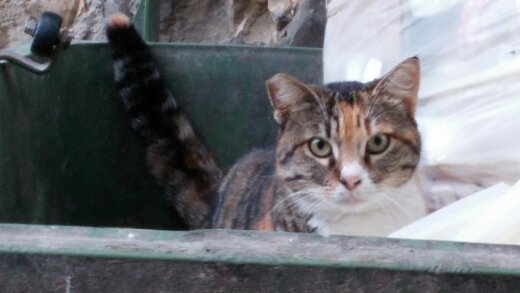
As for the Real Cats of Israel, the ones are the Jerusalem Zoo are definitely a part of the beauty of Israel:


Happy Reading!


Sunday, July 7, 2019

Letters from Israel

So many lament that with the advent of the internet and things like Twitter and Instagram, the art of letter writing is in serious trouble. We won't even talk about the lack of thank you letters, which is fertile ground for an entire tirade. While a picture may be worth a thousand words, for those who love the written word, a letter is a form of it that can be filled with news, or chatty banter, or serious reflection, or expressions of love, sympathy or support. So even in the age of email, when I see something in my inbox from a certain friend with the subject "Catching Up," I am excited to find out what is going on in her part of the world and her opinions about everything from music to books to politics. 

There were noted pen pals like Catherine the Great and Voltaire and Edith Wharton and Henry James, and Brain Pickings offers five books of famous correspondence "that shed new light on the hearts and minds of cultural icons" like Ernest Hemingway and John Steinbeck. 

Maria Popova says it so well:
What is it about letters that speaks to us so powerfully, intrigues us so seductively? Letters in general have a way of revealing as much about the subject matter as they do about the author and the recipient, but when they offer slivers of the lives, loves, and longings of those we hold in high regard, they hold a whole different kind of appeal. 

Especially pertinent at this time of the year, some of the most famous "Letters from Israel" are those written by Yoni Netanyahu (brother of Bibi), who lead the Entebbe operation and was killed during its execution on July 4, 1976. Published by Gefen in 2001, the book is "a collection of personal letters penned by Netanyahu over a period of thirteen years, from high school in Philadelphia to the raid at Entebbe." It includes a forward by Herman Wouk, who asserts that the letters are "A remarkable work of literature, possibly one of the great documents of our time."


This month, we look at some more recent publications:

Letters to My Palestinian Neighbor

Yossi Klein Halevi is "an American-born writer living in Israel." Perhaps that it part of the affinity for his writing, but moreover, it is because it is so good. Already a huge fan of Like Dreamers (Harper Perennial, 2014), I knew I would want to read whatever else he published. His latest book (Harper Perennial, 2019) "endeavors to untangle the ideological and emotional knot that has define the Israeli-Palestinian conflict for nearly a century," which is just a monster tangle to untangle.

In many ways I enjoyed the book. His writing style is so simple and clear, but so intelligent. He makes his points about Jewish history and commitment to Israel respectfully and without being preachy or accusatory: "We're trapped in what may be called a 'cycle of denial.' Your side denies my people's legitimacy, my right to self-determination, and my side prevents your people from achieving national sovereignty. The cycle of denial defines our shared existence, an impossible intimacy of violence, suppression, age, despair. This is the cycle we can only break together." As a senior fellow of the Shalom Hartman Institute, "a leader center of Jewish thought and education," Yossi spends much of his time in dialog and interacting with other thinkers and educators. Don't get me wrong; this is a good thing. It will take a long time to change the hearts and mind of those on both sides, and it is a tremendous start.

The newly released paperback edition includes an epilogue of "Palestinian responses." Klein Halevi received many letters, quite a few not fit for publication, and the ones at the back of the book are interesting and informative.

If I were to write Yossi a letter, I would say in focusing on what can be done in the present and not lingering on the past,  you do not reflect on a big contributor to the current situation: British (and European) colonialism, which after World War I chopped up the Ottoman Empire into pieces. On the one hand issuing the Balfour Declaration and on the other the 1939 White Paper, trying to placate both Jews and Arabs and failing miserably. (The Kurds are not so happy with that slicing and dicing, either.) I would point out while Israel has made the painful concessions of continuing negotiations despite terror attacks (which were allegedly renounced in the 1993 Letters of Mutual Recognition) and disengaging from Gaza, what are the painful concessions the other side has made? If they indeed "love this land in it wholeness," why are they currently sending incendiary balloons that are destroying the land? It's also interesting that Israel and Jerusalem and the Temple are mentioned so many times in Jewish texts and prayers, while the Palestinians have kept the keys to the houses in which they once lived. 

Armed with Spirit


The subtitle of this recent book (Gefen Publishing, 2019) is "A Father's Advice to His Son in the Israeli Army Based on the Weekly Torah Portions." Rabbi Shalom Hammer is a senior lecturer for Machane Meshutaf and the Jewish Identity Branch of the IDF and the founder of Makom Meshutaf, "offering nondenominational Jewish programming for secular kibbutzim and moshavim throughout Israel."

When Yakov was drafted as a combat soldier into a brigade of mostly nonobservant young people, Rabbi Hammer knew his son would face religious challenges, so every single day, Rabbi Hammer WhatsApped his son an inspirational dvar Torah based on the weekly Torah reading.  First of all, I love parsha books. I enjoy a quick read that focuses on a verse or theme in the weekly Torah reading. Second, if you are writing letters or charting a correspondence over a period of time, it's important to have dates to put the information in context. Third, if you are quoting from Jewish texts, especially the Midrash, include references. 

Obviously if a father is texting is son, there will be plenty of advice and quite a few "I love you and I'm proud of you"s.  But what comes through is the mutual respect between father and son, and some great Torah thoughts, from both Rabbi Hammer and his son. I particularly enjoyed the entry for Purim that talked about clothing - the Kohain's garments, Queen Esther's royal garments and the uniform an Israeli soldier wears. 


And finally, Real Cats of Israel Toxy and JoJo are doing what they do best:


Happy Reading!

Tuesday, October 25, 2016

Parsha Treats

In order to learn a little more about the weekly Torah portion and to enhance the Shabbat table, I try to make a "parsha treat" every week.  Some weeks it's very easy:  for Parshas Noach, anything rainbow works. Parshas Ki Teitzei includes the mitzvah of Shliuach Haken - sending the mother bird away from the nest before you take the young birds or eggs (Deuteronomy 22:6-7). We've made birds' nests and eggs out of Chinese noodles and rice cereal (with jelly beans for the eggs) and out of grated potatoes and spaghetti (with mini-meatballs for the eggs). Parshas Baha'aloscha offers a whole meal, as the Israelites complain because they miss the foods they ate in Egypt: meat, fish, cucumbers, melons, leeks, onions, and garlic (Numbers 11:4-5).  Other weeks are more challenging, and we sometimes have to look at the commentaries or possibly use a reference from the haftarah.

For example, in Parshat Vayeishev, Joseph's borthers cast him into a pit. "The pit was empty, no water was in it." (Genesis 37: 24). Rashi notes that if there was no water in the pit, there were serpents and scorpions in it (Shabbos 22a).  The verse and commentary inspired a "Joseph in the Pit Cake:"


I try to make things that are kid-friendly -- both in the preparation and the eating.  We often take the very easy way out: whenever the Torah mentions the cloud that accompanied the Israelites as they traveled through the wilderness, we have "Pudding in a Cloud," which is a bowl of whipped cream with chocolate pudding in the middle.

For those with more gourmet taste, or who want to use new ideas, two recent books have been helpful with this weekly challenge:


A Taste of Torah by Aviv Harkov (Gefen Publishing, 2016) provides not only recipes, but Divrei Torah and stories. Yes, there is a Chicken and Red Lentil Stew for Parsha Toldot and some Black and White Cookies, symbolizing separation, for Parsha Bereishit. Many of Harkov's recipes are for a more sophisticated palate:  Shepherdess Pie made with sweet potatoes and sweet and savory spices (for Parshat Vayetizei, which mentions that Rachel was a shepherdess); Salmon, Asparagus and Roasted Pepper Salad with Sun-Dried Tomato Vinaigrette (for Parshat Shemini, which discusses which fish are kosher); and "Toads in the Hole" for Parshat Shemot. I can't figure how some recipes relate to the Parsha: Thai Chicken with Fried Rice for Parshat Tsav; Deli Roll for Parshat Tetzaveh, but they look very appetizing in the color photographs and will definitely enhance the Shabbat table.


A modified version of the recipes and commentary in Rena Rossner's Eating the Bible (Skyhorse Publishing, 2013) originally appeared in the Jerusalem Post. She started this ambitious project the way many of us do: serving red lentil soup or stew for Parshas Toldot (when Esau sells his birthright to Jacob for "that red red stuff"). "The ability to bring the Bible alive in such a tactile way" motivated her. Rossner's book has more universal appeal, as she refers to "the Bible" and "the Old Testament," and although the recipes correspond to the weekly Torah reading, just the verse or verses that inspired the recipe are noted, not the name of the parsha. As is the current trend in cookbooks, it is not just ingredients and directions. With each recipe is "serious consideration of biblical texts." Rossner also provides alternatives that "provide either child-friendly ideas to make alongside the recipe of jumping-off points for your own recipes."Simple questions for discussion at the meal are also included.

Recipes included Red Lentil Soup, a technicolor salad for the week we read about Joseph's coat of many colors, Woven Tapestry Bread for the week we read about the items made for the Tabernacle, "Cat's Got Your Tongue Cookies" for the parsha that includes the commandment against gossiping, and Cucumber and Melon Gazpacho for Parshas Baha'aloscha, when the Israelites were complaining because they missed all the foods they ate in Egypt. The only week I found puzzling was Parshat Eikev, which specifically mentions wheat, barley, grape, fig, pomegranate, olives and date honey (Deuteronomy 8:7-8), when I make a fruit salad. Rossner chooses the next verse, which mentions that the stones are iron, and opts for a hearty "Iron-Rich Black Bean Soup."

There are also quite a few websites that provide ideas and inspiration:

Parsha Desserts

on Pinterest - Parsha treats/ideas and Parsha food

Parsha Project Resouces of Organized Jewish Home

Challah Crumbs

Bible Belt Balabusta - no parsha treats, but some great ideas (Jo's amazing creativity and sense of humor inspired us to add Lego and Fisher Price to our treats. Sonya Lee, one of the Little People, has portrayed Rivka and Miriam)


Happy Reading (and eating)!


Thursday, July 11, 2013

To Book Expo and Back Again

Between an early deadline, an international flight and jet lag, there was no way to make the deadline for the June Jewish Book Carnival. Book Expo America (BEA) is a fond memory. It was great to see friends and colleagues. The highlights: spending time with a very good friend, having Lemony Snicket sign a book for my daughter, and a surprise meeting with an old friend.

I had the Pink Pig Press on my list of booths to visit. It sounded interesting, though not kosher. I walk up and see Vell Sweeny, the publisher, who has a mission: “every author should have a chance to be published whether they already have been or not.” So besides the pink pigs and the fun hats, I recognized the name. No, not from her adult fiction, The Moon Says It Will and Try Not 2 Die, nor from the book she wrote and her daughter illustrated, Second Hand Cat, but from Facebook.

While the pros and cons of Facebook are a “whole ‘nother” discussion, it is rare to meet a Facebook friend, and the term “friend” is used very loosely. Most of these people are not really friends, and a lot delude themselves that they are loved and popular because they have an electronic connection with people who they will never meet in person. Well, Vell’s husband is my Facebook friend because I know him from kindergarten. We went through elementary, junior high school and high school together. His mother was there, and she lives in the same house in our hometown. So while interacting with authors, publishers, friends (not the Facebook type) and colleagues, seeing my kindergarten buddy was very cool.

In a semi-related encounter, I waited on the long line to have Adriana Trigiani sign The Shoemaker’s Wife, a “breathtaking multigenerational love story that spans two continents, two World Wars, and the quest of two star-crossed lovers to find each other again.” This could describe many of the Jewish books I read, and as others have noted, with our loves of food, wine, and religion, I feel like this Italian-American author and I are simpatico. Adriana (all her readers feel like she is a good friend) is always full of energy and love. She asks everyone what they do. “You’re an independent bookstore owner. I love you. You’re a librarian. I love you. You like my books. I love you.” It was very nice to have a “love break” amidst some people rather aggressively walking the show floor.

I picked up some interesting reads at the Javits Center:


I was very excited about Cats on Ben Yehuda Street. Ann Redisch Stampler has established herself as the master of the folktale (Something from Nothing, Shlemazel and the Remarkable Spoon of Pohost, The Rooster Prince of Breslov and The Wooden Sword). She’s also written for YA (Where It Began and the soon-to-be-published After Party). I am obviously a fan, and now Ann has combined two things I love: Israel and cats. Francesca Carabelli’s cheerful illustrations give the book a touch of whimsy, and there must be “Armon HaDag - Palace of Fish” store somewhere in Israel. It’s a sweet story of neighbors who become friends when a cat goes missing. But most people in Israel HATE the stray cats, often called “Israel’s squirrels.” They are usually found eating out of garbage dumpsters and are not cuddly and friendly. While this is not fodder for children’s books, it may be for a new reality show: The Real Cats of Israel.


I picked up a “free uncorrected proof” (not sure how this is different from an advanced reading copy) of My Basmati Bat Mitzvah (interesting, alliterative title) by Paula J. Freedman (reminiscent of Starring Sally J. Freedman as Herself by Judy Blume). It’s about Tara Feinstein, an Indian-Jewish-American who is facing this Jewish rite of passage with some ambivalence. While this theme is not new (Sam I Am by Ilene Cooper, The Truth about My Bat Mitzvah by Nora Raleigh Baskin), the bits of Indian culture had a new twist. Some of the elements of this dramatic pre-bat mitzvah time were captured well: the shopping, the boy who was a friend but now may be a boyfriend but there is so much pre-adolescent awkwardness about it that it takes a while, and the struggle to be your own person and make your own decisions without parental input or approval. Part of the drama is that Tara decides to incorporate her Indian heritage into her bat mitzvah by wearing a sari and serving ethnic food. It’s a cute story, not too heavy, and reading it (for deadline) brought back fond memories of the STBAC.

Consider the Birds is definitely not a Jewish book. It is written by Debbie Blue, a pastor at the House of Mercy Church in St. Paul, Minnesota. It is published by Abingdon Press, which touts itself as “continuing a tradition in religious publishing for crossing denominational boundaries with thought-provoking and enjoyable books,” although it is an imprint of The United Methodist Publishing House. But as Pastor Blue considers the birds she “approaches scripture like a farm wife handles a chicken, carefully but not delicately, thoroughly but not exactly cautiously.” Part of this approach is to use VERY Jewish sources, like Aviva Zornberg and Rabbi Natan Slifkin, better known as “The Zoo Rabbi.” So just after we read the weekly Torah portion about quail (Parshat Beha’aloscha; Numbers 11, verses 30-34), I read the chapter about “Quail: Desire and Slavery.” She asserts that “the story of the Israelites wandering in the wilderness, learning to know God—is not merely an item of Biblical history. These are stories that help us understand what our life is like with God. We still wander, we doubt, we wonder if it has been foolish to follow God because we often find ourselves in the desert. The quail in the Bible are both a sign of God’s extravagant care, and a sign that the Israelites’ desires need transforming. We are not exempt from the desert wanderings—but how else would we be transformed?” Jewish readers can skip the chapters about the pelican, and the chicken, but essays about the eagle and the ostrich provide for thought-provoking reading.

I was disappointed that there weren’t as many Jewish publishers or books, but I was happy to see my friend from Gefen with his Israeli flags displayed. Ilan was handing out advance reading copies of the English translation of Lihi Lapid’s book Woman of Valor (Eshes Chayil). According to the publisher’s description, “Lihi Lapid tells a true-life story of women and men struggling to live up to modern pressures: a story about shattered dreams, and about finding the strength to gather up the pieces and to learn to smile again.” She includes much of her own story of balancing her career as a photographer and newspaper columnist with giving her three children enough personal time and attention. “Her man” is Israel Finance Minister Yair Lapid.

I also stopped by the Cinco Puntos Press booth. This small but mighty press from El Paso has published such fine books as Benjamin Alire Sáenz’s Everything Begins and Ends at the Kentucky Club, the winner of the 2013 PEN/Faulkner Award for fiction, and recent Sydney Taylor Honor Book Blood Lie by Shirley Reva Vernick. But I was there to see my fellow Israeli Eve Goldberg Tal, author of Double Crossing and Cursing Columbus, both Sydney Taylor Notable Books for Teen Readers. We live less than an hour away from each other, but I had to travel 6,000 miles to see her in person. I was rewarded when she signed my copy of her first book in Hebrew, Ha-Agala Borachat (The Runaway Baby Carriage). I found this gem from 1985 at a used book store, and although it is an ex-library book in barely acceptable condition, I treasure it – partly because I know Eve, and partly because I can understand the story. Eve informed me that a new edition is going to be published shortly. I will have to make a date in Israel to have her sign that one!

Go2Films did not have a booth at Book Expo. Founded in 2005 and specializing in the distribution, marketing and exhibition of Independent Israeli films, my friends there opened my eyes to the diverse aspects of Israeli society and culture before I made aliyah. I’ve seen many films from their catalog, and I’ve learned something from each one. One of their latest had me laughing and crying at the same time: Welcome and Our Condolences. As Misha and his family emigrated from Russia in 1991, he was given a camera to occupy him. While making aliyah is challenging, it is even more so when your aunt dies on the plane and you have to deal with Israeli bureaucracy. Sitting around waiting to be processed, needing the right forms, having government employees yell at you and get angry when you yell back—ah, such fond memories!! Watching the movie, with some bad camera angles and some big pauses, I thought it was a real documentary until the credits rolled.
Looking forward to…


Pomegranates.

Coming soon: I enter the 21st century and a fabulous gluten-free cookbook.