Showing posts with label Real Cats of Israel. Show all posts

Thursday, December 12, 2024

Torah, Science and Stuff

The Science Behind the Mishnah by Rabbi Joel Padowitz and Rabbi Jonathan Sassen (Mosaica Press, 2024)  "attempts to explain the scientific topics encountered in the Mishnah to give the reader a better, deeper understanding of the Mishnah itself. At the same time... it explains more general issues to give the reader a better understanding of the larger scientific principles at work."


The authors emphasize the assertions of the Talmud, and many noted rabbis, that studying science "is often essential for a correct understanding and fulfillment of the Torah itself,'" and that "every Jew should have a basic understanding of, and familiarity with, the workings of the natural world because it enhances one's love and reverence for Hashem." 

First, physically it is a beautiful book. The clear, color photographs, are amazing and correspond well in illustrating the points brought out in the text. The figures and diagrams are also clear and clearly labeled. The combined index and glossary works adeptly to explain the scientific concepts, with easy reference to the pages on which they appear. The text itself is laid out to facilitate reading, with headings and subheadings, and text large enough so that the reader does not feel he is reading a textbook or a scientific manual.

Second, it has the approbations of noted rabbis, who not only "approve" of the content, but are excited that such a book is available. 

Mishnayos Brachos is the first tractate of Zeraim (seeds), the first order of the Mishnah [there are six orders of the Mishnah, which is the first written collection of oral traditions. It was redacted by Rabbi Yehudah Nasi at the end of the 2nd century and the beginning of the 3rd century CE]. This Mishnah discusses the laws of prayers, and blessings, many of which are recited over food. 

The Mishnah begins with a question about when one may recite the Shema prayer in the evening. In Chapter One, "Twilight," the authors present light and the horizon, photons from the sun, and how the rays of the sun travel through the atmosphere. Following the verses of the Mishnah, each chapter begins with the verse in the Mishnah and goes on to explain the science. Subsequent chapters discuss "Fats," color vision and how the eye works, whispering (in regard to pronouncing prayers correctly), flax and how it is prepared for use, and the movement of the earth around the sun. The 32 chapters contain scientific facts that are "cool," like how snakes kill their prey, how cheese is made, and "The Color of Fire," as well as more technical explanations of the chemical composition of sugar molecules and vinegar and acids, the process of cellular respiration, and the sound of thunder.

For those who watched The Big Bang Theory, I felt much like Penny, both reading a quote from Richard Feynman (noted Jewish-American theoretical physicist who won the Nobel Prize for physics in 1965), and reading about some of the more complicated science. You can "test" some of the information, especially things about light, color, and sound, and the fact that you cannot whisper the sound "z." What is even more astounding is that the rabbis of the Mishnah were aware of these things way before the science was documented.

It is hard to pinpoint the target audience. While people would study Mishnah would gain from it, as would people  interested in science, is there a significant intersection between the two groups who would be the "perfect" group? We could see these as the basis for a course in a Jewish school that has solid curriculum in both Mishnah and science. 

The End of an Era

This is the last round of the Jewish Book Carnival. Thanks to Heidi Rabinowitz and Marie Cloutier for starting it 14 years ago, and to the Association of Jewish Libraries for continuing the project. We have been fortunate to be able to muse about Jewish books (and other things) through these years. Thank you to all the hosts and hostesses for compiling the links. Thank you to all the authors and other interviewees. And thank you to all those who read these posts, so we didn't feel like a tree fell in the forest, but no one heard it!

As we wax nostalgic, here are our 5 personal favorites from Life Is Like a Library:

In 2011, Hereville: How Mirka Got Her Sword won the Sydney Taylor Book Award for Older Readers. At the Association of Jewish Libraries Conference in Montreal, we met author Barry Deutsch and surprised him by showing up in costume as Mirka. We loved the whole series, and it yielded two blogs:

Being Mirka and Mussar from Mirka

Also in 2011, we went to a baseball game with my son. Seeing this blog reminds me of a beautiful day, and how many books there are about Jews and Baseball. 

From 2017, Knit One, Read Two is a compilation of Jewish books about knitting -- a combination of two of our favorite things to do. 

Also in 2017, we read the right books at the right time to commemorate our mother's yahrzeit (anniversary of death) on the Hebrew date 19 Tammuz.

In 2019, we interviewed Naomi Ragen. We was so honored that she graciously answered my questions. We felt like we "hit the big time" talking to a popular author.

Finally, thank you to The Real Cats of Israel for allowing us to include you in my blog. This feature started in 2013, when Cats of Ben Yehuda (Kar-Ben) was published. Many cats fans and non-Israelis love that they are so many cats wandering the streets of Israel, but most residents find these feral felines, who often travel in packs and pick through garbage dumpsters, a nuisance. The trend continued with Hard Hat Cat (Kar-Ben, 2020), And a Cat from Carmel Market (Kar-Ben 2021) and Professor Buber and His Cats (Kar-Ben, 2022). 

We at Life Is Like a Library are cat lovers, so here's yet another Real Cat:

Happy Reading!


Wednesday, April 10, 2024

Double, Double, Toil and Trouble


Wisdom from the Witch of Endor: Four Rules for Living
by Tikva Frymer-Kensky was recently published by Eerdmans Publishing Company. Frymer-Kensky died in 2006, and this posthumous volume is emblematic of her interests in drawing from the biblical text and championing women. To fully appreciate this little gem, we had to put a few pieces together.

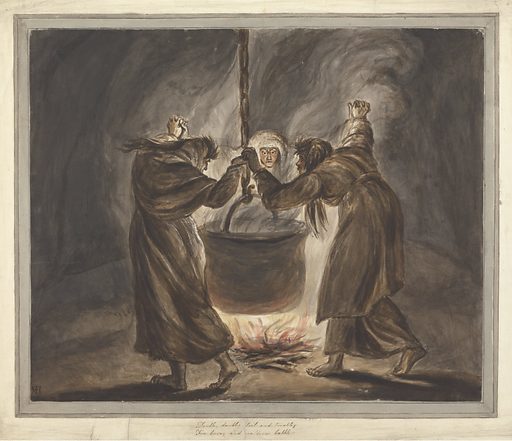
Today, when we thick of witches, the coven from Macbeth comes to mind. This creepy group meets secretly and makes a nauseating brew in their cauldron:


Eye of newt and toe of frog,

Wool of bat and tongue of dog, 

Adder's fork and blind-worm's sting,

Lizard's leg and howlet's wing, 

For a charm of powerful trouble,

Like a hell-broth, boil and bubble.

The witches predict that Macbeth will be king, but that Banquo's descendants will be monarchs. They tell Macbeth that "no man of woman born" can kill him, and that he will not be defeated "until Birnam wood comes to Dunsinane." All of which comes true. Macbeth is killed by Macduff, who was born via caesarian birth, and his forces cut down trees to use as camouflage when they attacked at Dunsinane.

Many assert that Shakespeare found inspiration in Samuel I, Chapter 28. Saul has been deteriorating, both mentally and physically, even more so since Samuel the Prophet's death. Saul tries praying and calling out, but he cannot reach God. Although he has outlawed necromancy, Saul disguises himself and brings two attendants to a witch. She is hesitant to help, since it is against the law, but Saul implores her, and she communicates with the deal Samuel. 

Samuel asks why the witch disturbed him, and he gives Saul the bad news: he and his son will be killed in battle the next day. Saul is distraught, and the witch sees he is upset and gives him bread and meat before he goes on his way. While the witch did not make the predictions, Samuel's prophecy comes true, and David becomes king.

We never learn the name of the sorceress (fun fact: Endora, Samantha's mother on the 1960s television show Bewitched got her name from this chapter). But she is not the spooky, cackling, stereotype that casts spells; she is a professional with empathy.

Fryer-Kensky elaborates on the four lessons we learn from the Witch of Endor:

  1. Know your power.
  2. Strive to excel.
  3. Choose the moment.
  4. Win well.

After recounting the biblical story, she explains how the Witch applied these rules. Finally, she illustrates how we can use the rules:

[The Witch of Endor's] story reminds us that even people whose actions are suspect in their own day can be wonderful, magnanimous, and benevolent spirits. And so can we.

A small book, a quick read, but one with a message relevant to our times. The "other" is often discounted or disparaged, but everyone should know their power and strive to excel. Their moment to shine will come, and when it does, they should take it with grace.

 Real Cats of Israel

These real cats were in Jerusalem, enjoying one of the first warm days of spring:


Happy Reading!

Besorot tovot (May we hear good news soon!)!

Sunday, February 11, 2024

Life IS Like a Library

 Our blog gets its title from the quote by Harry Emerson Fosdick, and especially in these turbulent times, it is obvious that most books were written and are being written for us, and we have no control over anything that is happening. 

For those of us who have had the privilege or working in or using a great library, we know it is a magical place, full of books and other materials just waiting to be discovered. As collectors of quotes, these came to mind:

A truly great library has something to offend everyone. - Jo Godwin (librarian)

A public library is the most democratic thing in the world. What can be found there has undone dictators and tyrants. - Doris Lessing

The libraries of America are and must ever remain the home of free and inquiring minds. To them, our citizens - of all ages and races, of all creeds and persuasions - must be able to turn with clear confidence that there they can freely seek the whole truth, unvarnished by fashion and uncompromised by expediency. - Dwight D. Eisenhower

We often participate in projects where book lists are compiled and created. Sometimes it's really fun to think of books on a particular subject or by certain authors. Other times, it's a little more challenging. There may be a book on the subject or by the author, but it may not be suitable for the intended age group or be the strongest book on the subject or by the author. Talking about books is something librarians LOVE to do, so while there can be a lot of back and forth about what books to include, the resulting list is usually created with care and purpose.

In the current "matsav" (situation) - after October 7th, we need books that educate and enlighten. As Rudine Sims Bishop so eloquently observed in her famous piece on "Mirrors, Windows, and Sliding Glass Doors:"

Those of us who are children's literature enthusiasts tend to be somewhat idealistic, believing that some book, some story, some poem can speak to each individual child, and that if we have the time and the resources, we can find that book and help to change the child's life. If only for a brief time, and only for a tiny bit. On the other hand, we are realistic enough to know that literature, no matter how powerful, has its limits. It won't take the homeless of our streets; it won't feed the starving of the world; it won't stop people from attacking each other because of our racial differences; it won't stamp out the scrouge of drugs. It could, however, help us to understand each other better by helping change our attitudes toward difference. When there are enough books available that can act as both mirrors and windows for all our children, they will see that we can celebrate both our differences and similarities, because together they are what make us all human. 

With this in mind, we sought out books that could be "windows" into a culture with which we are unfamiliar. We hoped to find books with no agenda, no politics, no framing - just good stories and/or factual information. To say we went out of our comfort zone is an understatement. We walked into a neighborhood where we stuck out like huge, flashing sore thumbs, and we had to wade through books that were popular, but did have agendas, politics, etc.

Tunjur! Tunjur! Tunjur! A Palestinian Folktale

Retold by Margaret Read MacDonald
Collected by Ibrahim Muhawi and Sharif Kanaana
Illustrated by Alik Arzoumanian
©2012 Two Lions

A charming story about a little pot who steals things and then gets her "just reward." Love, love, love the vibrant illustrations: the characters with big eyes, the geometric borders around the pictures, and the feisty little red pot.


The Magical Hands of Zalatimo


By Salam Akram Zalatimo
Illustrated by Margarita Fomenko
©2018 Create Space

An adorable rhyming book about a baker who makes the best mutabak (a treat made with sheets of dough, cheese curds, and sugar syrup). Based on a true family history (read more here), the delicious pastries (see how they are made here) put a smile on everyone's face.

While the original shop, opened in 1860, is still in Jerusalem's Old City, Momo's descendants have opened shops (and factories) all over the world.


Arab Fairy Tale Feasts: A Literary Cookbook


Tales by Karim Alrawi
Illustrations by Nahid Kazemi
Recipes by Sobhi al-Zobaidi & Tamam Qanembou-Zobaidi and Karim Alrawi
©2021 Crocodile Books

Part of a series that includes Chinese Fairy Tale Feasts (2014) and Fairy Tale Feasts (2006), these "literary cookbooks" combine short tales with classic characters and classic recipes. This volume includes "Fish Soup in Gaza," accompanied by a recipe for fish soup. The notes include explanations of these characters like Goha (Joha), the wise fool, descriptions of the items in the recipes, and etymology of many of the Arabic words used in the stories and recipes. Colorful illustrations show the foods and compliment the text, like a picture of a winking girl who has outsmarted the teller of the "big fish tale." All the recipes are relative simple, although some of the ingredients are exotic.

We were saddened by the "coulda, shoulda, woulda" of so many books, and that out of nine books, only three fit the criteria. Some had incredible artwork, some showed beautiful examples of community caring and sharing, the richness of the culture, and some had a cute story. But the politics and the agenda overshadowed all these merits.

Real Cats of Israel

As for the Real Cats, this is about as real as it gets. We saw this crew outside when we went to pay a condolence to the family of 24-year-old Amichai Oster, who was killed in Gaza. Seeing this clowder of cats gave me a smile after a very sad visit.


Besorot tovot - May we hear good news soon!
Happy Reading!

Monday, October 2, 2023

The Beauty of Israel

I cannot help but wonder at the irony of my blog when Israel is being attacked on all sides by her enemies. But I think this is an important post. We in Israel basically want to live in peace and enjoy our beautiful homeland.

 Jewish librarians have lamented that there are very few books for children about Israel that are just positive, good books -- no politics, no agenda. This season, there are three excellent children's books and a "coffee table book" that highlight the beauty of Israel, its diverse plants and animals and their ecosystems, and the wonder and miracle that is the Land of Israel.


Hava Divon's Barefoot in the Sand (Green Bean Books, 2023) is a story about making dreams come true. From the time he was a boy and heard stories about an amazing place, Saul longed to go to the Land of Israel and put his bare feet in the sand. When he grows up, he charts the way there from his home in Romania. Walking many miles, then taking a train, then taking a boat, he finally arrives in Tel Aviv. He then takes off his heavy boots and dances barefoot in the sand, joyfully singing Psalm 114 - “When the Jews left Egypt – a place so strange to Jacob and all his descendants – the Land of Israel became their haven and their home.” But wait! As Saul is reveling in being in Israel, another man, who has dark skin and is holding his sandals, is also barefoot and completes the verse from the Psalm. He is Solomon, and he has ridden a donkey all the way from Yemen. Rotem Teplow's illustrations complement the text, and they capture the dream and yearning of Jews to be in Israel in the past and today.


Thank you to the folks at Eerdmans Books for Young Readers for an advance copy of Martin Lemelman's The Miracle Seed because as I read this book, I keep saying "Cool!"

Graphic novel - cool

Archeology in Israel - cool

Discovering a 2,000-year-old date seed - very cool

Planting the seed and growing a date palm - really cool

And harvesting the dates - super cool

The graphic novel format is perfect for the combination of history and science. I can hardly wait to visit the Arava Institute in southern Israel and see the trees for myself!

Wikipedia Commons


A Feather, a Pebble, a Shell
(Kar-Ben, 2024) is written and illustrated by Miri Leshem-Pelly, the author and illustrator of over a dozen children's books, including Chloe's Nature Journal and Penny and the Plain Piece of Paper. Based on her childhood experiences, Leshem-Pelly captures the beauty and diversity of Israel. From north to south, there are so many interesting and wonderful places. I was pretty excited to see the Twins Cave, also known as the Bat Cave included in the book because my family has often hiked there. It always amazes me that there are lush green parks in the center of Israel, and about two hours' drive south, the landscape is dry and stark, with totally different animals and plants. 

Unlike the girl in the book, who leaves the feathers, pebbles and shells she discovers for other people to find, I love having a little souvenir of my visit:


In My Israel: Seventy Faces of the Land (Gefen Publishing, 2023), "seventy prominent Israelis write movingly about their own special corner of the Land of Israel." Compiled by Nechemia (Chemi) J. Peres (son of Shimon) and Ilan Greenfield (Gefen's publisher), the book is divided into five sections: Zionist History: Sacrifice for the Homeland, Nature: The Land of Milk and Honey, Social Equality: Coexistence and Unity, Spirituality: History of the Jewish People, and Culture and Leisure: Life in Israel. Full disclosure: we like looking at pictures better than reading essays, although the one by Miriam Peretz, which describes why Samuel's Tomb is significant to her is touching (her sons Eliraz and Uriel "fell in battle during their service in the IDF"). Other contributors include Israeli executives, rabbis, and IDF officers, who describe their connection to places like Akko, Ben Gurion Airport, military cemeteries and historical sites like the Atlit Detention Camp, the Western Wall, and Habima National Theater. The mayor of our fair city (running for re-election, by the way) talks about Tel Beit Shemesh archeological site and the challenge of preserving it in the midst of a growing city. Our favorites: the dramatic landscapes of the Ramon Crater and the Negev and the gorgeous beaches at Arsuf Kedem and Tel Aviv.


As for the Real Cats of Israel, the ones are the Jerusalem Zoo are definitely a part of the beauty of Israel:


Happy Reading!


Saturday, August 12, 2023

The Joys of Summer Reading

Between the extended hours of daylight, perhaps a lighter schedule, and some scheduled vacation, summer has always been an opportune time to read. We have fond memories of the Summer Reading Program at the local public library with special membership cards and charts and prizes, which included a game of bowling and a free frozen yogurt. We've always thought such incentive programs would work well for adults, but maybe with some more "mature" prizes.

Libraries and bookstores promote "beach reads." Interestingly, The Guardian did research and found that the term gained popularity in the 1990s. Over time, it began to describe a certain type of book, something that will have mass appeal and isn't particularly intellectually stimulating.

Our summer reading thus far does not fall into the "beach read" category:


First off, a recommendation for Wrath Becomes Her by Aden Polydoros (Inkyard, October 2023). We were lucky enough to get an advanced copy of the latest book by the author of The City Beautiful - winner of the 2022 Sydney Taylor Book Award for Young Adults. We were totally blown away by this book about a female golem that takes place in Lithuania during the Holocaust. Interesting characters, strong sense of place and time, and a denouement (fancy word for how the whole story is wrapped up) that kept us on the edge of our seats, refusing to put down the book until we were finished. Run out and get this one immediately! 


Another highlight has been Possession by A. S. Byatt, a 1990 Booker Prize Winner. Our friend Jennifer recently organized "The Long Book Club." For those who many be intimidated by a book that is over 300 pages, she decided the group would read a long book - 500+ pages, but that we would meet every two weeks to discuss about one hundred pages. It feels a little like taking a course and doing homework, but with this book, it is well worth the time and effort. No Jewish content, but tons of references, fancy words, interesting places, and mythology and marine biology. As we read, we marvel at the genius of Byatt for weaving it all together in a story of a Victorian romance and a contemporary one.


And then there's a children's Passover book - Workitu's Passover (Green Bean Books, 2023). It is "a story from Ethiopia" about the custom of Ethiopian Jews to break up their clay kitchenware before the holiday, "blend the fragments with more clay, and then create new containers from the mixture." Great illustrations complement the text, where Workitu is not happy because the family will break their dishes, but in the end, is happy to help her Auntie with the new creations.

Finally, the Real Cats of Israel have been trying to stay cool in the heat:


Happy Reading!


Thursday, June 8, 2023

Can the Whole World Be Wrong?

 At Life is Like a Library, we love trifectas. And we got a great one recently. Thank you to Pomeranz Books in Jerusalem for hosting an event promoted as

Lethal Journalism and the Oslo Debacle: A Panel About Media Bias Against Israel

Three authors spoke about the topic:

Eliezer Tauber, author of The Massacre That Never Was (The Toby Press, 2021);

Richard Landes, author of Can the "Whole World" Be Wrong?: Lethal Journalism, Antisemitism and Global Jihad (Academic Studies Press, 2022);

and David Bedein, author of Roadblock to Peace: How the UN Perpetuates the Arab-Israeli Conflict (Israel Resource Agency, 2014)

Also in attendance:

 Jonathan Pollard, a former US intelligence analyst who was convicted of "conspiracy to deliver national defense information to a foreign government" and given a life sentence. He was paroled after 30 years and moved to Israel shortly after his parole expired. He sat on the panel with the authors;

and Leo Dee, whose wife and two of his daughters were murdered in a terrorist attack on April 7, 2023. He had much to add to the discussion in terms of how his family members' murders were reported by the media.

Pomeranz is one of our all-time favorite bookstores on many levels. It is a nice big store full of an eclectic mix of Jewish books (and some secular self-help books). It is located on Be'eri Street in Jerusalem, up the street from Froumine House on King George, which was the temporary home of the Israel Knesset from 1950 to 1966. And best of all, the staff is knowledgeable, courteous, and helpful. And, obviously, they host interesting and engaging book events.


Each author spoke, and then the panel interacted and later fielded questions from the audience. Professor Tauber is "a world expert on the emergence of the Arab nationalist movements, the formation of the modern Arab states, and the early phases of the Arab-Israeli conflict. He is currently the director of the Menachem Begin Institute for the Study of Underground and Resistance Movements." He spent four years researching his book and one year writing it. The notes comprise about a third of the book, and Tauber's sources includes archival records, typescripts of interviews, and many memoirs. 

True to its subtitle, Tauber debunks "the myth of Deir Yassin." On April 9, 1948, Etzel and Lehi members attacked the village of about 1,000 residents west of Jerusalem as part of a larger Haganah operation to make the Jerusalem-Tel Aviv highway safe and break the siege of Jerusalem. About 100 villagers were killed, including women and children, as well as five of the attackers. Most of the villagers escaped to a neighboring village and the reminder were taken prison and moved to eastern Jerusalem. But the battle was exploited to enflame the Arabs against the Jews. The number of casualties was highly inflated, and false reports of rape and other atrocities were spread. Rather than encouraging the Arabs to fight, they fled. Hopefully Tauber's excellent research and presentation will finally put this myth to rest.


Professor Landes
was trained as a medievalist and taught history at Boston University. His book "documents how a radical inability of Westerners to understand the medieval mentality that drove Global Jihad prompted a series of disastrous misinterpretations and misguided reactions that have shaped our so-far unhappy century." Another meticulously researched book with extensive footnotes, a comprehensive bibliography and detailed index,  one Amazon reviewer calls the book "frighteningly brilliant and brilliantly frightening." One of our favorite aspects of the book is Landes' terms to describe the current "journalistic" environment, including "Masochistic Omnipotence Syndrome," "Moral Schadenfreude," and "Humanitarian Racism." At a hefty 486 pages of text, it is a fascinating and worthwhile, if challenging read.  


David Bedein established the Israel Resource News Agency and serves as the director of the Center for Near East Policy Research. He also created and maintains the website Israel Behind the News. His book details how the United Nations Relief and Works Agency for Palestine Refugees in the Near East (UNRWA) blocks peace and supports the teaching of hate and terror in Arab schools. It keeps the refugee issue alive and "avoids any permanent solution to the plight of the refugees from the 1948 war."

Bedein spoke about current efforts to "report Israel's reality to the media," and efforts to stop Palestinians terrorists and their families from receiving stipends for killing Israelis.

As for the Real Cats of Israel, this guy was wandering around the Adamit National Park in Northern Israel, probably more interested in what the picnickers were eating than the amazing views and the Keshet "Cave": 


Keshet "Cave" at Adamit Park

Happy Reading!


Friday, May 12, 2023

MAY 2023 JEWISH BOOK CARNIVAL


Life Is Like a Library is honored to host the May 2023 Jewish Book Carnival -- a monthly round up of links from across the blogosphere. It includes book reviews, author interviews, essays and other posts related to Jewish books.

The purposes of the Jewish Book Carnival are to build community among bloggers who feature Jewish books and their blogs, and to promote Jewish reading and fields supporting this reading such as publishing and library services.


As with the last time we hosted (in December 2022), Gila Green is the first one to submit, so she's at the top of the list. This month at Gila Green Writes, Meryl Ain shares what it's like to write a second novel.


At Jewish Books for Kids and More, Barbara Bietz interviews Laurel Snyder about her new middle-grade novel, The Witch of Woodland.


On her blog Book Q&As with Deborah Kalb, Deborah interviewed Maxim D. Shrayer about his new book, Immigrant Baggage.


On her My Machberet blog, Erika Dreifus celebrates Jewish American History Month with a distinctly literary flair. 


On The Book of Life Podcast, you can celebrate Jewish American Heritage Month using these resources that include a book list and a list of webinars on Jewish kid lit, and by listening to an interview with Susan Lynn Meyer about her middle grade Jewish novel set on the American prairie, A Sky Full of Song.


The Sydney Taylor Shmooze mock award blog has a review of the new graphic novel version of The Librarian of Auschwitz by Antonio Iturbe. The original prose version won the 2018 Sydney Taylor Book Award in the young adult category.


The Association of Jewish Libraries, in cooperation with ALA Graphics, is pleased to bring you this beautiful new Jewish American Heritage Month poster, with original art by Sean Rubin, illustrator of the 2021 Sydney Taylor Book Award winning picture book, The Passover Guest by Susan Kusel. Order your poster and matching bookmarks here: https://jewishlibraries.org/celebrate-jewish-american-heritage-poster/


And, at Life Is Like a Library, it's that time of year to read books about Counting the Omer and making positive changes. 


Heidi Rabinowitz has started a new Instagram account, Kidlit Kippot at https://www.instagram.com/kidlitkippot/, to curate images of Jewish representation in illustrations (kippot and other visual markers of Judaism), especially in non-Jewish kidlit. Please follow @kidlitkippot and if you have examples, please send images to Heidi at bookoflifepodcast@gmail.com.
Enjoy!

Thursday, May 11, 2023

Counting the Omer 5783

 The period between Passover and Shavuot is a time for introspection and a good opportunity to work on character development as we move from the Exodus from Egypt to receiving the Torah. As in the past, the Life Is Like a Library reading list for these 49 days is a combination of Jewish and secular books. 


In Dance of the Omer: A Step-by-Step Guide to the Transformational Journey of Sefirat Ha'Omer (Mystical Skeptics Publishers, 2021), Rav Benji Elson presents the daily and weekly count as "a journey and process that follows the Waters of Eden as they flow out from the Garden, transform in the processes of precipitation, and ultimately, become the plants of the Garden -- this planet -- and the wheat of the Omer grains themselves. The Dance of the Omer, then, is a transformational 'movement' that mirrors the natural cycles involved in the growth of Life and in the growth of the Omer Offering itself." 

There are many "layers" to this dance. For each week, Elson presents the form of water (River, Sea, Storms, etc.) as well as the corresponding blessing from the Amidah, the Hebrew vowel sound, the type of song, the color, the direction (North, South, etc.), the element (Water, Air, Earth, Fire), the Archetype, and the Prophetess. There are meditations and visualization practices. For each day, there is a discussion of the power of that day, a practice, and a suggestion to apply what was discussed about the day. 

To be honest, there is a lot of metaphor and non-standard practice that is not my cup of tea. But the book provides a lot of information, and the metaphor of water flowing and changing works well to emphasize that we should also be building upon the days of the Omer, noticing the natural flow of life, and hopefully applying what we learn all-year round.


The New York Times Bestseller Atomic Habits by James Clear is a perfect book for the Omer. Don't think "atomic," as in Atomic Bomb blowing up things. Think "atomic" in terms of the atom -- "the smallest unit into which matter can be divided without the release of electrically charged particles." Tiny changes can lead to remarkable results. 

Why this book is so great is because, according to Clear, when you look at your habits, you don't want to think in the short term. 

THERE ARE NOT GOOD HABITS OR BAD HABITS. THERE ARE ONLY EFFECTIVE HABITS.

(This reminded me of one of the tenets of character development: there are no "good" character traits or "bad" character traits. The challenge is to have them in balance, with appropriate traits in appropriate situations).

You have to ask yourself:

DOES THIS BEHAVIOR HELP ME BECOME THE TYPE OF PERSON I WISH TO BE?

DOES THIS HABIT CAST A VOTE FOR OR AGAINST MY DESIRED IDENTITY?

Exactly what we should be thinking about as we count the Omer. Highly recommended reading for everyone, the young the better, so you can develop and maintain good habits and break bad habits early. 

As for the Real Cats of Israel, sometimes you just need to take a nap on a bookcase:


Happy Reading!


Monday, September 5, 2022

Elul 5782

As Rosh Hashanah approaches, our preparations for the New Year accelerate during the month of Elul: shopping, cooking and baking, and preparing both emotionally and spiritually. It's also a good time to review the past year, noting both accomplishments and areas that can use some improvement, and then plan for the New Year. At Life Is Like a Library, some of the many books we've read over the past year are particularly apropos for Elul:

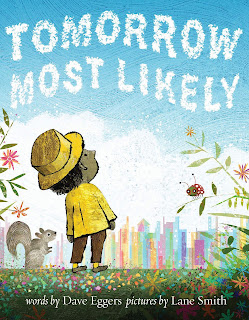
Two great children's books remind us to think positive. In Tomorrow Most Likely by Dave Eggers (Chronicle Books, 2019), a boy starts out with the assertion that "tomorrow most likely there will be a sky. And chances are it will be blue." As he goes through his day, he reassures himself of other things that are most likely tomorrow, like squirrels and airplanes, and finding rocks, but also riding whales and eating clouds. Lane Smith's amazing illustrations make this book a visual delight, and the comfort of things that are "most likely" is a perfect message to keep in mind in the coming year. 

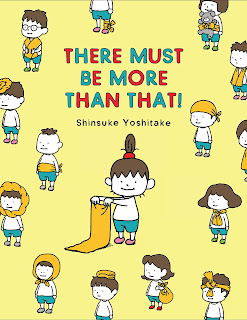
Shinsuke Yoshitake's There Must Be More Than That! (Chronicle Books, 2020) also has a great message for Elul. "Grown-ups often tell you to choose one of two things. But if neither of them seems right...there are more choices over here!" Little sister's imagination goes wild with the possibilities. From reassuring to ridiculous, we must remember there are always more than two options.

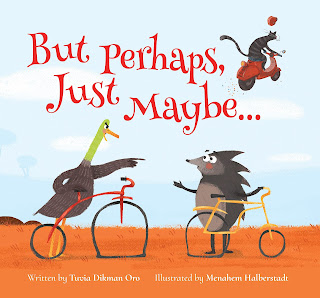
But Perhaps. Just Maybe... (Green Bean Books, 2022) was one of our favorite children's books this year. The combination of cute illustrations and mussar (character development lesson) is a winner. Bonus points that the lesson is directly from Pirke Avot -- giving the benefit of the doubt.


And yet another Green Bean Book based on a verse from Tanach - Nuri and the Whale. Written by Ronit Chacham, translated by Mekella Broomberg and illustrated by Oran Yogev, it tells the story of, well, Nuri and the Whale. Nuri follows his father's advice, taken from the Book of Ecclesiastes (Kohelet): "Cast your bread on the water, and one day it will come back to you" (11:1). He feeds a little fish every day, and soon the fish grows big. The fish takes him to see the Wisewhale -- the King of the Sea. Wisewhale gives Nuri the ability to understand the language of animals and gives him some parting words,"Know that there will be days to come when you will give and take -- and you will be both happy and sad." Some interesting things happen to Nuri, and he passes his sage advice to his grandchildren: "Those who open their hearts will be rewarded in the end. What will the reward be? Sometimes treasure, sometimes a smile, and sometimes a joyful heart." What a great message to start the year. The gorgeous illustrations bring the story to life.


Brene Brown's The Gifts of Imperfection (20th Anniversary Edition, Random House, 2020)is a must read, and it's a perfect book for Elul. Brown encourages everyone to strive for wholeheartedness. She provides ten guideposts to help you get there, and each guidepost has suggestions for Digging Deep -- Getting Deliberate, Getting Inspired, and Getting Going. The guideposts include cultivating self-compassion, cultivating calm and stillness, doing meaningful work (even if you are not paid in currency) and cultivating laughter, song and dance. 


The Hired Girl
by Laura Amy Schlitz, the 2016 Sydney Taylor Book Award Winner for Teen Readers, is the story of Joan/Janet, a farm girl who escapes the drudgery of her life of chores and becomes a hired girl to a Jewish family in Baltimore. There are so many wonderful aspects of this book that include Joan's honest and romantic personality, history and aspects of life in the early 1900s, and Joan's appreciation of Judaism as she works for the family. But I found this to be such an "Elul book." Joan/Janet is always inspiring -- to read more books, to learn, to become a better Catholic, and to be helpful to other people. And isn't that what Elul is all about?!

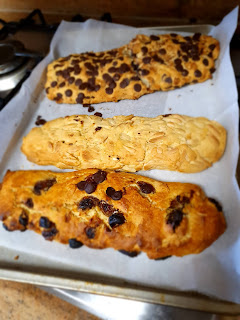
And one more time...Boulou, the sweet bread or cake that Jews of North African (Libya, Tunisia) origin traditionally eat during the month of Tishrei. (From Babka, Boulou & Blintzes: Jewish Chocolate Recipes from Around the World (Green Bean Books, 2021)


BOULOU


from Fabienne Viner-Luzzato (www.fabienneshomecooking.com)


Makes 3 boulou (each one will cut into several slices; number of slices depends on thickness)
Prep time: 30 minutes
Cook time: 15-20 minutes


Ingredients


2 large eggs (2 extra-large eggs in the US)
150 g/5 1/2 oz/3/4 cup sugar
2 teaspoons vanilla sugar
125 ml/4 fl oz/1/2 cup vegetable or sunflower oil
about 500 g/1 lb. 2 oz/ 3 3/4 cups self-raising flour (extra for dusting)
100 g/3 1/2 oz/2/3 cup dark chocolate chips
50g/ 1 3/4 oz/ 1/3 cup raisins
50 g/1 3/4 oz/1/3 cup flaked almonds


1. Preheat the oven to 200 degrees Celsius/180 degrees Celsius fan/400 degrees Fahrenheit/Gas Mark 6. Line a baking sheet with non-stick baking paper.


2. Place the eggs, both sugars and the vegetable or sunflower oil in a mixing bowl and mix together using a fork. Start adding the flour slowly, mixing with your hands to form a dough. Mix the flour in well, avoiding leaving behind lumps of flour. Add enough flour to make a soft dough -- the consistency of the dough needs to be soft, easy to touch but still slightly sticky.


3. On the work surface, divide your dough into three equal portions to make three different flavored boulou. Add the chocolate chips to one portion of dough, the raisins to another and the flaked almonds to the final portion of dough, kneading each flavoring into the dough until evenly distributed. Cook's Tip: If you prefer, you can mix all the flavoring ingredients together (the chocolate chips, raisins and almonds), then simply divide this mixture into three and knead one portion into each portion of dough.


4. Roll the flavored portions of dough into three equal-length logs (you might need to dust the work surface with a little flour first) and then flatten each one into a rectangle about 5 cm/2-inch wide and 15-20 cm/6-8-inch long, then place on the lined baking sheet.


5. Bake for 15-20 minutes, until they become golden brown. Remove from the oven and transfer to a wire rack, then leave to cool completely. Once cool, cut into 2 cm/3/4-inch thick slices to serve (or you can cut them into thinner slices, if you prefer).


6. Store the baked logs in an airtight container at room temperature for up to 4-5 days, and slice them, as needed. They will keep for longer, but will dry a little -- but they will still taste amazing dipped in hot black coffee!


As for the Real Cats of Israel, they are also excited for Elul, anticipating lots of delicious food scraps from all the cooking and baking:


Happy Reading!

Thursday, August 4, 2022

Between the Dire Straits - Bein HaMetzarim

 The three week period between the 17th of Tammuz and the 9th of Av is known as "Bein HaMetzarim" - between the dire straits, and it is the saddest period in the Jewish calendar. The custom is not to hold weddings, not to play or listen to live music, and not to cut hair or shave (as a sign of mourning). Because it is considered a time of misfortune, many avoid dangerous situations, such as travel or surgery. But, as always in Judaism, it is also a time to reflect and learn. So when we are between the "dire straits," we read a lot of Holocaust-related material:


Catherine Ehrlich writes about her grandparents' harrowing experiences in Austria before, during and after the Anschluss in Irma's Passport: One Woman, Two World Wars, and a Legacy of Courage (She Writes Press, 2021). Irma, Ehrlich's grandmother, was one of the rare women who attended university in the early 20th century. She and her first husband planned to go to England and study literature, but World War I started, and he was killed in combat. Heartbroken, Irma went to Vienna to teach. She encountered Jacob Ehrlich, whom she had known in their native Bohemia (Czech Republic). They married and had a son, Paul. Soon after, the Nazis arrived and made life miserable for the Jews. Catherine never knew her grandfather. As an active leader of the Jewish community, he was arrested and taken to Dachau, where he died. Irma was able to use her knowledge of languages and connections to escape to London with her son. She spoke to Jewish groups about the urgent need to save the Jews trapped in Nazi-occupied areas. After the World War II, she and Paul moved to the United States, where she eventually worked filing persecution claims for Holocaust survivors.

Irma literally lived history, and much of the book is about historical events. It is also interesting how many nationalist stirrings and Antisemitism there was even before World War I. Irma was a survivor, and her granddaughter combines Irma's account of her life, the historical events, and her own memories of this formidable lady to show that Irma refused to think of herself as a victim.


Subtitled "A Story of Resilience," A Child Without a Shadow (self-published, 2021) is the story of Shaul Harel. His family left Warsaw in 1932 for Brussels, where he was born Charles-David Hilsberg in 1937. When the Nazis invaded, he and his sister were separated from their parents and hidden with non-Jews. After World War II, he was sent to an orphanage, then a school, and immigrated to Israel when he was twelve. He served in the Israeli army, went to medical school, and became a renowned pediatric neurologist. This book contains a lot of reflection. Did Shaul's time as a hidden child, where his life was devoid of love, mental stimulation and fresh air, spur him to his achievements and his caring way with child patients? Another fascinating and inspiring story of someone who lived history. 


The Forgotten Memoirs
(by Esther Farbstein; Mesorah, 2011) may have the wrong title because the stories are unforgettable. Its subtitle, "Moving Personal Accounts from Rabbis Who Survived the Holocaust," gives the reader an idea of the content. Farbstein did extensive research and found that many rabbis published learned books after World War II, and in the introduction to the book or in an afterword, they described their experiences during the Holocaust. These introductions are the text of the book. Each story is unique, but there are some similarities: the rabbis' circuitous journeys through Europe to escape the Nazis, their concerns for their constituencies, and their adherence to Torah Judaism no matter the danger or challenge. It's a thick volume, but it is probably better to take breaks between each rabbi's account. 


The Vanishing
(Library Tales Publishing, 2022) by David Michael Slater is billed as "an unforgettable journey of redemption and revenge." The story starts when Sophie Siegel is eleven years old, and the situation for Jews in Germany is deteriorating quickly. As she hides from Nazis in a closet, she realizes she is invisible. Her primary goal is to keep her younger neighbor, Giddy, safe and alive. But as she moves from her village to the ghetto to a concentration camp, she learns that there are no rules, and no justice. Full of action and full of graphic detail of Nazi atrocities, the reader will root for Sophie and Giddy. 


Hopefully, this will be the last time we read Holocaust books during the Three Weeks because they will be transformed into days of joy!

As for the Real Cats of Israel, we've had quite a parade of feral cats, including Noga:


Meaningful reading!

Tuesday, July 12, 2022

Leaving Eastern Parkway


At Life Is Like a Library, we read a lot of books in the "Off the Derech (OTD) genre -- stories of religious Jews who decide to leave the Orthodox fold (See some selections in the AJL Bibliography Bank). That is the only spoiler we will give so that you can enjoy all the humor and irony in Matthew Daub's first novel. Available in September from Delpinium, the novel centers on Zev Atshul, a handball-playing fifteen-year old from Crown Heights Brooklyn. The story takes place in the early nineties, where Zev is conflicted about his love of handball and his place in the Lubavitcher Hasidic community. After a tragedy, for which Zev feels guilt, he goes to live with his sister in Urbana-Champaign, Illinois. Life in the Midwest is a challenge. But this resourceful teenager stumbles to find his way, making interesting friends and questioning God's mercy and justice.

Full disclosure (put no spoilers!): I had low expectations for this book. So many OTD books have stereotypical characters, especially the religious ones, who come off as crazed, hypocritical and cultish. And, of course, all the non-religious characters are wonderful and morally superior. The characters here were more nuanced, and Zev's relationship with a Reform Rabbi is a combination of both awkward and touching. Although the characters do walk down Eastern Parkway, the main drag in the Lubavitch community in Crown Heights, there is much more significant Jewish content and a Yiddish glossary at the end for all the words included. The author has also captured the cadence of speech easily recognizable in this Brooklyn enclave. The pacing is great. The story develops slowly but steadily and the mix of mundane and dramatic is just right. There is a strong sense of place in Brooklyn, Urbana, and Chicago (and another location!). The ending is satisfying -- not happily ever after, but one that makes sense for the story. As said, full of irony, some sadness, but lots of humor, including Zev trying to lose his Brooklyn cadence by watching and repeating after a television host.

Daub is a retired university art professor, and one wonders how much of his personal experience is reflected in the character of Paul in the novel.

I can't wait to discuss this one with super librarian and book group moderator Rachel Kamin!

As for the Real Cats of Israel, they are taking it easy in the summer heat:


Happy reading!