Showing posts with label Koren Publishers. Show all posts

Sunday, April 7, 2019

Passover 5779

Because this year is a leap year on the Jewish calendar, Passover is relatively late this year, beginning on Friday night, April 19th. As with almost all Jewish observances, there are customary foods and family favorites.  

Haroset

Haroset is that mixture of fruit and nuts on the Seder plate in which we dip the bitter herbs.  In Haroset: A Taste of Jewish History (The Toby Press, 2019), Dr. Susan Weingarten "attempts to solve the riddle of the origins of haroset -- when and why it appeared, what it was made of and how it changed over the generations." Dr. Weingarten is an archaeologist and historian and has published many scholarly papers about the history of food. Full disclosure: what I thought would be an academic discourse (boring) is a fascinating exploration of both Jewish sources and cultural influences. As Weingarten explains in the introduction:


Haroset has always been something of a mystery. It was not one of the three original symbolic foods eaten at the first Passover in Egypt. It first appears in the Mishna, but with no explanation of why, and with few details of what it was made of or what it tasted like. The [Babylonian and Jerusalem] Talmuds tell us that haroset was said to resemble the mud or clay for the bricks made by the Children of Israel as slaves in Egypt, so it was clearly connected to the story of the redemption from an early stage, but we do not know when it arrived at the Seder. It seems to have been introduced to counteract the bitter herbs, which have been part of the Passover meal since the time of the Exodus. 
I learned that many ancient cultures using dipping sauces to offset the tastes of other foods. Ashkenazi Jews pretty much use the same basic recipe -- apples, nuts, wine, cinnamon, and all the ingredients have deep symbolic meaning. Sephardic Jews enjoy a variety of recipes, varying from community to community and depending on the fruits available in the spring. Some groups even "add a small amount of clay or scraped brick" into the mixture. History also influenced the development of haroset, as red wine used to be added at the Seder table, but the practice was discontinued in Europe because of blood libels. Communities often made a huge batch that was distributed to all the families. 

Most recipes are not exact; the important thing is that the consistency should be thick, like mortar. Sephardim often cook the mixture, and grinding the mixture is an important part of the process for all cultures. 

Want to add an interesting taste to your Seder? Try "Zoya Leviva's Haroset from Uzbekistan:"


black raisins
almonds
red wine
optional: walnuts

©The Toby Press and Dr. Susan Weingarten, 2019. Used with permission.

Passover Baking

Paula Shoyer is known as "the Kosher Baker," and she is an expert on the history of Jewish cookbooks. She is also the author of four cookbooks: The Kosher Baker (Brandeis University Press, 2010), and three from Sterling Epicure: The Holiday Kosher Baker (2013), The New Passover Menu (2015), and The Healthy Jewish Kitchen (2017). For Passover, she is sharing some recipes for the holiday that those who eat "keto"will also enjoy.

For those who have been living under rocks, the keto (ketogenic) diet is protein rich, high fat, low carbohydrate plan of eating. The diet has been suggested for children with epilepsy, those with neurological disorders, those on the spectrum, and Parkinson's Disease patients. Those who work out frequently have also embraced the keto diet. Since so many carbohydrates are either chametz or kitniyot (grains, beans, and soy that Ashkenazi Jews do not eat on Passover), you can literally have your cake and eat it, too, as the baking ingredients for her desserts include coconut oil, almond flour, and quinoa.

Lemon Quinoa Cake   - PAULA SHOYER
Serves 12
PREP TIME: 20 minutes BAKE TIME: 15 minutes to cook quinoa, 65 minutes to bake cake ADVANCE PREP: May be made 3 days in advance or frozen

CAKE
¾ cup quinoa
1½ cups water
Cooking spray or 2 tablespoons oil
2 tablespoons lemon zest, from 2-3 large lemons
½ cup fresh lemon juice, from 2-3 large lemons
4 large eggs
1 teaspoon pure vanilla extract (or other vanilla if for Passover)
¾ cup coconut oil
1 ¼ cups sugar
1 cup almond flour
¼ cup coconut flour, plus 2-3 tablespoon to dust bundt pan
2 teaspoons baking powder
1 teaspoon baking soda
½ teaspoon salt

Glaze
1 cup confectioners’ sugar
2 tablespoons fresh lemon juice (from 1-2 lemons)

Place the quinoa and water into a small saucepan and bring it to a boil over medium heat. Reduce the heat to low, cover the saucepan, and cook the quinoa for 15 to 18 minutes, or until all the liquid has been absorbed. Let sit for 5 minutes off the stovetop. The quinoa may be made 2 days in advance and stored in the fridge.

Preheat the oven to 350°F. Use cooking spray or oil to grease a 12-cup Bundt pan. Sprinkle 1 to 2 tablespoons coconut flour, or more if needed, over the entire greased pan and then shake the pan all around to cover and then tap out the excess.
Place the quinoa in the bowl of a food processor. Add the lemon zest and juice, eggs, vanilla, oil, sugar, almond flour, coconut flour, baking powder, baking soda and salt and process until the mixture is very smooth, about 2 minutes.
Pour the batter into the prepared Bundt pan and bake it for 1 hour, or longer, until a skewer inserted into the cake comes out clean.

Let the cake cool for 30 minutes and then remove it gently from the pan onto a wire cooling rack.
Recipe by Paula Shoyer 
used with permission

As a responsible reviewer, I tried this recipe, and...
I am not a big fan of coconut, which came through more than the lemon for me. But, the cake is super easy to make, there are no weird ingredients that are not available during Passover, it does not require tons of eggs that have to be separated, and it was gone in less than 24 hours, so somebody enjoyed it very much.  Further proof is that my cake looks similar to the promotional picture of Paula's.


For more about Paula Shoyer, super colleague Heidi Rabinowitz spoke to her at the Limmud Conference in Boca Raton, Florida in December, 2018, and you can hear their conversation at Heidi's podcast - The Book of Life.

The Real Cats of Israel are enjoying the spring weather:
People watching at the Central Bus Station in Jerusalem
Chag Kasher V'Sameach!
A Happy and Kosher Passover!
Happy Reading!

Tuesday, February 12, 2019

It's Time for...


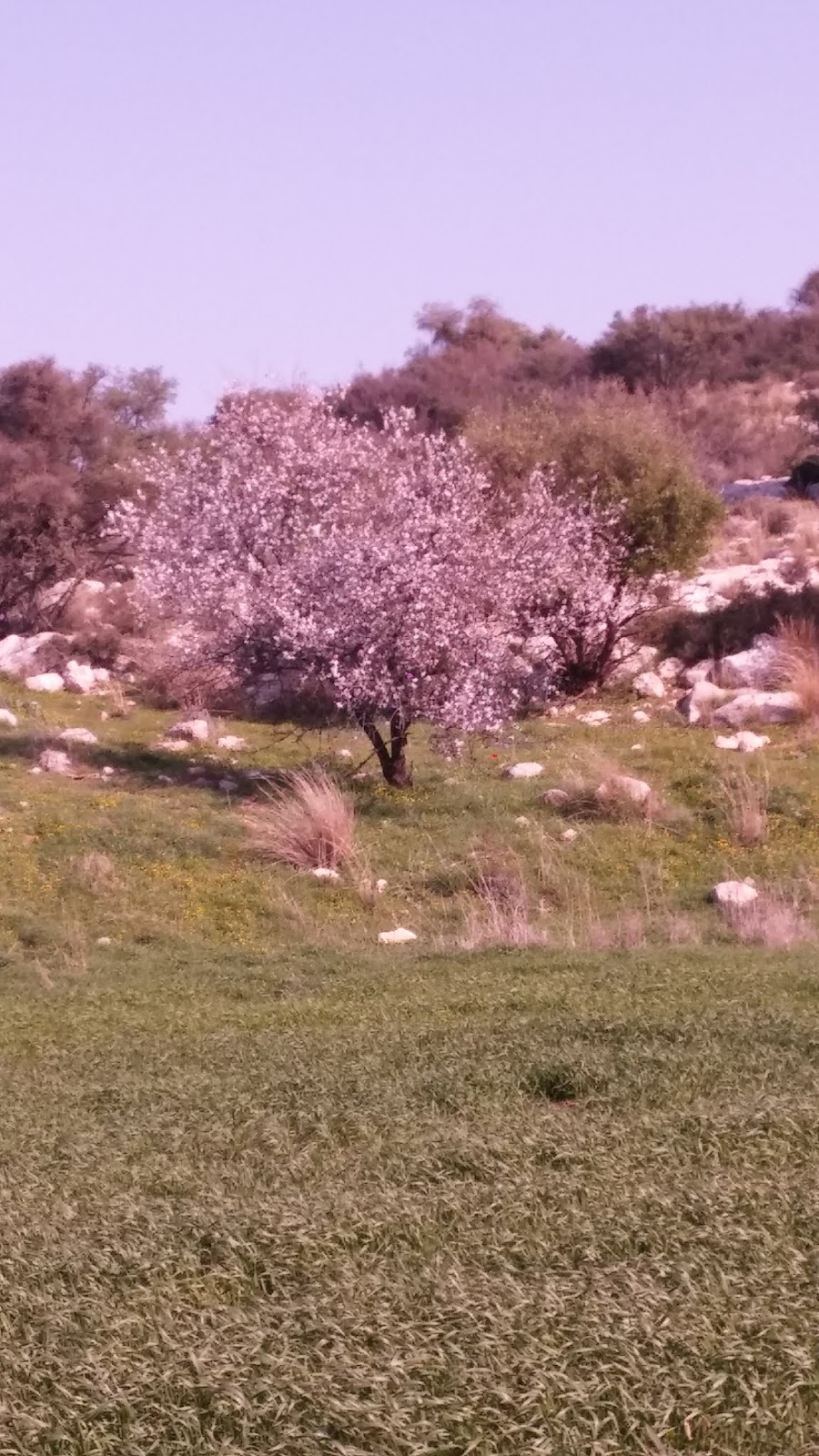
Here in Israel, we recently celebrated Tu B'Shevat, the almond trees are in bloom , and Spring is right around the corner, which means two things


IT'S ALMOST PASSOVER!!!! 

and

It's almost tax time - time to think about finances


Graphic Novel Format Haggadah

Koren, in the tradition of "the rich legacy of illuminated manuscripts," has recently published

PASSOVER HAGGADAH GRAPHIC NOVEL


The team of Jordan B. "Gorf" Gorfinkel, Erez Zadok and David Olivestone have created a clever and colorful Haggadah that will enhance any Seder. The varied formats means that turning the pages uncovers new surprises, from the Venn Diagram-like picture illustrating the four types of children, the panels of the Ten Plagues (and Pharaoh's hard heart), the cumulative counting of "Who Knows One," and the page showing poses with everyday items and then with Jewish artifacts. Diversity is also evident (if you didn't notice, it's four types of children, not just sons), with an eclectic group gathered for the "Ma Nishtanah" and Jewish experiences like the Ethiopians making Aliyah and a secret Seder in the former Soviet Union.

There is a lot of information about symbolism and customs, and the "to do" items for the Seder are depicted in blue and white "pop ups," with Father Goat explaining the procedures to his Daughter Goat. My favorite is when it's time to eat the bitter herbs.

©2019 Koren Publishers. Used with permission.


Could the graphic novel format be the modern-day version of manuscript illumination? I think it could:

Kaufmann Haggadah - 14th Century
IWEN Corner

Two of the ladies recently featured here belong to a group called IWEN - the Israeli Women Entrepreneurs' Network. These female business owners in Israel are providing all kinds of good and services. More than that, they are helping their fellow IWENs by offering suggestions and moral support. It turns out many of the members are involved in book-related endeavors, so a new feature at Life Is Like a Library will highlight some of these ladies.

First up, Debbie Sassen. She is a financial advisor. A former investment banker, and the mother of eight, this lady has the experience and insight to help those who might be nervous about taking charge of their finances and investing. We recently met and talked about her soon-to-be available (April) book The $1K Investor: Simple, Smart Steps to Start Investing with $1K or Less (self-published, 2019).


With a minimum of financial jargon, a discussion of the benefits and drawbacks of specific financial instruments is followed by Sassen's  four-step process, which starts with defining specific goals, evaluating risk, deciding on the mix of your portfolio, and deciding if you want to do it yourself or work with an advisor. She goes on to address myths and mistakes, then provides some suggestions for getting started.

She generously answered my many questions about the book and personal finance, and she emphasized the value of starting small. It's less scary, and it can eventually become fun. For those who are afraid of losing money, she gives the great example of buying a pair of shoes that were tight, and that you hoped would stretch out. Think of a $100 loss the same way. I had the misconception that everybody is pretty much the same when it comes to investing, and while there are rules of thumb, Debbie set me straight that there is no cookie-cutter approach -- everyone has different goals and different issues.

Debbie works with more than just the numbers. She does a lot of coaching and energy work, and for those who are open, she talks about God, trust and faith. One of the issues she discusses in the book is being comfortable with what you're doing and being confident that your advisor makes your interests a priority. Her book will definitely help the small investor with their decisions.

Thank you to Debbie. If you are interested in the book, or in connecting with her, please visit her website: https://debbiesassen.com/


And, one of the Real Cats of Israel, Toxy, is very excited about the lemons harvested from her backyard:

Happy Reading!


Sunday, September 13, 2015

And Yet...

Rabbi Shlomo Freifeld, zt"l, said that the most hopeful phrase contains just two words -- and yet.

Japanese poet Kobayashi Issa also expresses this in his haiku:

露の世は露の世ながらさりながら
Tsuyu no yo wa tsuyu no yo nagara sari nagara
The world of dew –
A world of dew it is indeed, 
And yet, and yet . . .”


while the world is fragile, it is the only world we have.


Last summer three teenage boys were kidnapped and murdered. Operation Defensive Shield led to the discovery of tunnels and a heinous terrorist plot.  More than 70 people, most of them young soldiers, were kill in the operation.  The sirens went off and I spent some time in the bomb shelter.  This summer has been just as emotional: a toddler and his parents were killed because of an arson attack on their house, and a 16-year-old girl died as the result of stabbing wounds inflicted by someone opposed to the Jerusalem Gay Pride Parade.

And yet, this evening I am sitting outside recalling the song I sang at summer camp and thinking how it came true:

Next year we'll sit on the porch and count the birds;
Children on vacation will play tag between the house and the fields...
(Bashana Haba'ah - lyrics Ehud Manor; music Nurit Hirsch)

Elul is the time in the Jewish calendar when we reflect on the past year and hope to do better in the coming year. I try to find reading at this time of year that will inspire this goal:

Koren has published The Neuwirth Edition of Pirkei Avot (Ethics of the Fathers) with translation by Rabbi Lord Jonathan Sacks and commentary by Rabbi Marc D. Angel. One of my favorite Jewish texts, it is customarily read on the long summer afternoons between Passover and Rosh Hashanah. At this time of year, the words of Rabbi Tarfon has particularly meaningful:

The day is short, the task is great, 
the laborers are lay, the reward is much, 
and the Master insistent.

He used to say:

It is not for you to complete the task, but neither are you free to stand aside from it. 

(Ethics of the Fathers, 2:20-21)

Rabbi Tarfon's kever in the Galilee

I've been reading a lot of review books, and I have not been impressed with any of them.  Taking a break, I read an ARC I picked up at Book Expo in 2013: Counting by 7s by Holly Goldberg Sloan (Dial Books for Young Readers). Though I am assuming the author is Jewish, there is no overtly Jewish content. But the story of a quirky genius who unites other quirky people into a community and a family has so many Jewish values laced through it -- kindness to others, tikkun olam, treating everyone with respect and acceptance of others, quirks and all -- that it was a perfect pre-Rosh Hashanah read. 

Shana Tova!


Friday, September 12, 2014

What I Read During the Matsav II


Although it was been hard to concentrate because of the sirens and the news, I've had quite a few books to keep me occupied while I sat in my bomb shelter.

A big thank you to the folks at Koren Publishers/Maggid Books.

The fifth and final book in the Torah Lights Series by Rabbi Shlomo Riksin was published just in time to read along with the weekly portion of the book of Deuteronomy or Devarim.  The subtitle for this volume is "Moses Bequeaths Legacy, History, and Covenant," and it emphasizes Moses' role as he addresses the Jewish nation for the final time, reminds them of the laws and ordinances, and prepares them to enter the Land promised to them by God. Each essay analyzes a verses or verses from the weekly reading.  There are quite a few essays for each parsha, sometimes analyzing the same verse from a different perspective.  Although not noted, it seems these commentaries have been published previously.  In almost everyone, Rabbi Riskin mentions Rabbi Joseph B. Soleveitchik, zt"l, as his rebbe and mentor.  For Parsha Eikev, there are several essays about the importance of saying Grace After Meals, based on the verse, "And you shall eat and be satisfied and bless the Lord your God for the good land which he has given you" (Deuteronomy 8:10).  Rabbi Riskin explores why it is so important to thank God for bread.  We see that if there is human involvement, the human look upon his own efforts and not fully appreciate the part that God played in bringing food to the table.  "The more the individual is involved, the greater the sanctity and the higher the praise.  God is constantly in search of humans to be His partners in perfecting the world and thereby to bless Him."


Speaking of Rav Soloveitchik, zt"l, the Rav was rebbe and mentor to many. One of the biggest challenges of Tisha B'Av is maintaining the atmosphere of mourning throughout the day.  It is hard to fully grasp the lost of the Temple because there hasn't been a temple in our times (yet!!!). There is also a prohibition against Torah learning on this solemn day.  One way to understand this loss and learn something in the process is by using the Koren Mesorat HaRav Kinot (the Lookstein Edition).  The commentaries explain the poetry and allusions clearly, pointing out the intricate and disciplined structures.  The liturgical poems are put into context with the information about the authors and their backgrounds.  I can't say it was an enjoyable read, but it is definitely an informative read that made Tisha B'Av more meaningful.

A Temple in Flames: The Epic Story of the Final Battle for Jerusalem is also from Maggid Books and also appropriate Tisha B'Av reading.  It was recently published in cooperation with Megalim: City of David Institute for Jerusalem Studies.

It is authored by Gershon Bar-Cochva and Ahron Horovitz, and is "based mainly on the descriptions of Josephus Flavius, who was an eyewitness to the fighting from the Roman side."  This is my favorite kind of non-fiction book.  First of all, the author's passion for the subject matter is evident throughout the pages.  These pages are filled with maps, time lines, pictures of coins, Roman salary slips and other artifacts, and detailed illustrations of Jerusalem and the battles. There are so many points of interest in the book:  political history, archaeology, Israel, military tactics and weaponry, that almost everyone will want to take a look at this book -- some to browse, others to read in detail. For those of us in Israel, it is amazingly cool to see the actual sites mentioned in the book and walk the same pathways.

Sometimes a title sparks your interest, and such was the case with Relics for the Present: Contemporary Reflections on the Talmud by Rabbi Levi Cooper (Maggid, 2012).  "This work explores the world of the sages, seeking relevance in the timeless texts of the Talmud. Each section analyses a passage from Berakhot, the first tractate of the Talmud, chapters one to five, presenting the commentators' insights, searching for meaning and hoping to provide inspiration for our generation." This is neither a quick read, nor a page turner, but Rabbi Cooper's analysis makes the arguments of the Talmud more accessible for the rest of us. Why in Jewish law does the day begin at night? "Improving our society can be achieved only by a combination of the roaring of the lion and the cooing of the dove -- by public proclamation and by private inculcation." And in these turbulent times, an essay about "War as a solution, diversion or catalyst" revealed how timeless our sacred writings truly are. Bonus points for a list of sources cited that includes when and where the authors lived.

Coming soon:  a biography of Ovadia Yosef and a book about Holistic Prayer.

And, of course, real cats of Israel:


Best wishes for a happy, healthy and peaceful New Year.