Showing posts with label Jerusalem International Writers' Festival. Show all posts

Sunday, June 12, 2022

The Jerusalem International Book Forum and The International Writers Festival

 Every May, Jerusalem is host to the International Book Forum and The International Writers Festival. As with many events, this live gathering was highly anticipated. While there were many interesting sessions from which to choose, the one that caught my eye was "Where the Cool Kids Are: The Rise and Rise of YA and Children's Literature." As an aside, my former English teacher, Christopher Pomeroy Fearon, is rolling in his grave about a phrase ending with a form of the verb "to be" and with a colon after it. But I guess the "Cool Kids" don't worry about proper grammar.


This was the first YA panel ever presented at the Forum. The session was moderated by Rena Rossner, Literary Agent at The Deborah Harris Agency in Israel. Her first question to the participants was about what's happening in the market, and what's selling. Obviously, the pandemic had a huge impact on book sales, with increases across the board. Barbara Marcus, President and Publisher, Random House Children's Books PRH, US noted that even though the US industry is down eight percent, retail sales continue to grow. Books about Social Justice, Asian Americans, and the ever-popular Dr. Seuss were big sellers.

Thille Dop, Senior Publisher, Children's & YA Literature, Luitingh-Sifthoff, Netherlands, was a delight. Young readers in the Netherlands want to read in English -- Wimpy Kid, Story Treehouse, Dog Man are favorites. 

What is happening in Italy? Very impressive that during the lockdown, books were considered an essential good, like medicine and groceries, and bookstores remained opened. Marta Mazza, Editor in Chief, Mondadori Children's Books, Italy said the Heartstopper Series (a Queer romance graphic novel) was very popular. 

Natasha Farrant, a literary scout and author from the UK, commented that comedian David Walliams' book sold very well during the pandemic.

Finally, Belina Ioni Rasmussen, Managing Director of Macmillan Children's Book UK noted that the young part of the market grew. Sales of picture books and activity books increased significantly, and children's books accounted for 24.5 percent of the market -- bigger than the adult fiction market. She also talked about the phenomena of Marcus Rashford, a professional football (soccer) player for Manchester United. He is also an activist and very involved in charities that address food poverty. And, he involved with literacy. In 2020, he launched a book club and his book, You Are a Champion was published in 2021. The book club will distribute 50,000 free books annually, and hope to release two new books are year. 


All of the speakers noted two big trends in the YA market. The first is social media. Bookstagram and Book Tok, dedicated areas of Instagram and Tik Tok, respectively, are driving the market. People are posting loads of content about their favorite books. On the positive side, if people like the book, it will attract more readers. On the negative side, this content can also be negative and dissuade young readers from picking up the book. Readers are creating communities, and this organic growth of book lovers can make or break a book. 

The second is the rise of the physical book. E-books and audio are not so popular, but special editions are all the rage. On of the panelists mentioned Illumicrate, a subscription service that delivers a box of goodies that include a hardcover book with an exclusive cover design, and a variety of book merchandise that can include drinkware, stationery, bookmarks and tote bags. 


Here are the major trends mentioned:

  • Horror 
  • Graphic novels
  • Increase in sales of banned books
  • LGBTIA+
  • books about mental health/self-care/resilience
  • manga
  • the rise of the backlist
  • and poetry and other books to feed the soul


As for the Real Cats of Israel, exciting news from the Safari in Ramat Gan - a litter of five sand kittens was born on May 16th.


Sand cat kittens at safari
(Photo: Yam Siton)
Happy Reading!


Monday, May 13, 2019

Jerusalem Prizes

I attended the the opening event of the Jerusalem International Writers Festival on Sunday, May 12th.  Mayor Moshe Leon presented the Israel Prize to American author Joyce Carol Oates for lifetime achievement in the Humanities. She has authored over 58 novels, as well as poems, short stories, plays and novellas. Her books have been finalists for the Pulitzer Prize, and she has won the National Book Award and two O. Henry Awards. Full disclosure: Of all her works, I have only read We Were the Mulvaneys because it was a pick for Oprah's Book Club, and even though it was sad, I enjoyed it because of the nuanced characters, the family dynamic, and the sense of place in Upstate New York.

So,  a day in Jerusalem is always special for me. As I rode from the Central Bus Station to the YMCA, there  was a petite blonde girl in an army uniform with a big musical instrument case on her back. She got off at the same stop I did, but she walked much faster than I did to wherever she was going. To my surprise (and delight), she was the cello player in the string quartet that introduced the evening. Just another example of what a small world it is and how I feel so connected to my fellow citizens. 

On to the opening ceremony. After a lot of thanks and recognition of dignitaries, which took even longer because there were in Hebrew and in English, the chair of the selection committee explained the criteria for the award and why Joyce Carol Oates is such a worthy recipient. The Jerusalem Prize is awarded every two years to international writers "whose body of work assert 'The Freedom of the Individual in Society'," and in her acceptance speech, Oates proclaimed that "without freedom, there is no art." 


She also spoke of her paternal grandmother, who bought her books, paid for piano lessons, bought her a typewriter, and took her to get a library card. After her grandmother died, Oates learned that she was Jewish and basically erased that part of her life. Oates' 2007 novel, The Gravediggers' Daughter, is based on her grandmother's life and  "her family history that was filled with pockets of silence."


The evening included a tribute to Amoz Oz, the noted Israeli author who died in December of 2018. Oates is also a fan of his, and quoted from Oz's 2002 memoir A Tale of Love and Darkness:

"When I was little, my ambition was to grow up to be a book. Not a writer. People can be killed like ants. Writers are not hard to kill either. But not books: however systematically you try to destroy them, there is always a chance that a copy will survive and continue to enjoy a shelf-life in some corner on an out-of-the-way library somehwere in Reykjavik, Valladolid or Vancouver."


And here is one of my favorites:

"While it was true that books could change with the years just as much as people could, the difference was that whereas people would always drop you when they could no longer get any advantage or pleasure or interest or at least a good feeling from you, a book would never abandon you. Naturally you sometimes dropped them, maybe for several years, or even forever. But they, even if you betrayed them, would never turn their backs on you: they would go on waiting for you silently and humbly on their shelf. They would wait for ten years. They wouldn't complain. One night, when you suddenly needed a book, even at three in the morning, even if it was a book you had abandoned and erased from your heart for years and years, it would never disappoint you, it would come down from its shelf and keep you company in your moment of need. It would not try to get its own back or make excuses or ask itself if it was worth its while or if you deserved it or if you still suited each other, it would come at once as soon as you asked. A book would never let you down."


In Search of Another Prize

I've been having a lot of fun with  ScaVentures Jerusalem: The Experiential Guidebook by Tali Kaplinski Tarlow. Whether hanging out by the windmill (May 2018), or giving myself a mini-mission as I pass through the Machane Yehuda Market (December 2018), I've seen things I don't normally look for, and by doing so, learn more about Jerusalem and Israel.

But my best and most exciting experience was at the beginning of the month when I joined a group of "influencers" to test the "app" of the ScaVentures Guide to Machane Yehuda, better known as "the Shuk Dash." Tali split us into teams and gave us a brief history of the area. In the early 20th century, it was an open field where Arab merchants sold their produce out of crates.  The field was owned by the wealthy Valero family, of Spanish descent, and it was originally called the Valero Market.


Chaim Aharon Valero (1845-1923)
As its popularity grew, the merchants set up huts. After World War I, the British rebuilt the area, and it is that market that we go to today. Armed with a tablet and a map, the teams went off to meet people shopping and selling goods in the market, find different items, and have fun. Lots of sumptuous pastries, piles of interesting spices, fresh fruits and vegetables, and fish are just some of the items on your grocery list that can be found in the market. Alas, there is no bookstore, but you can go to the barber, and there are many, many places to eat serving all kinds of food. 


The beauty of "touring" the shuk this way is that it is experiential. Whether you are holding a raw fish or searching to find the green wall, you are interacting with all kinds of people, really looking around the area, and using the strengths of your team to complete the missions. At first I thought, "How can I spend two hours in the market?" But as the clock ticked down, and we had to return to base, I reflected that I could probably use another hour, and I would still not see all there was to see. 

So here's a shameless plug (on my part, no Tali's) for Israel ScaVentures:


Israel ScaVentures


Shuk Dash


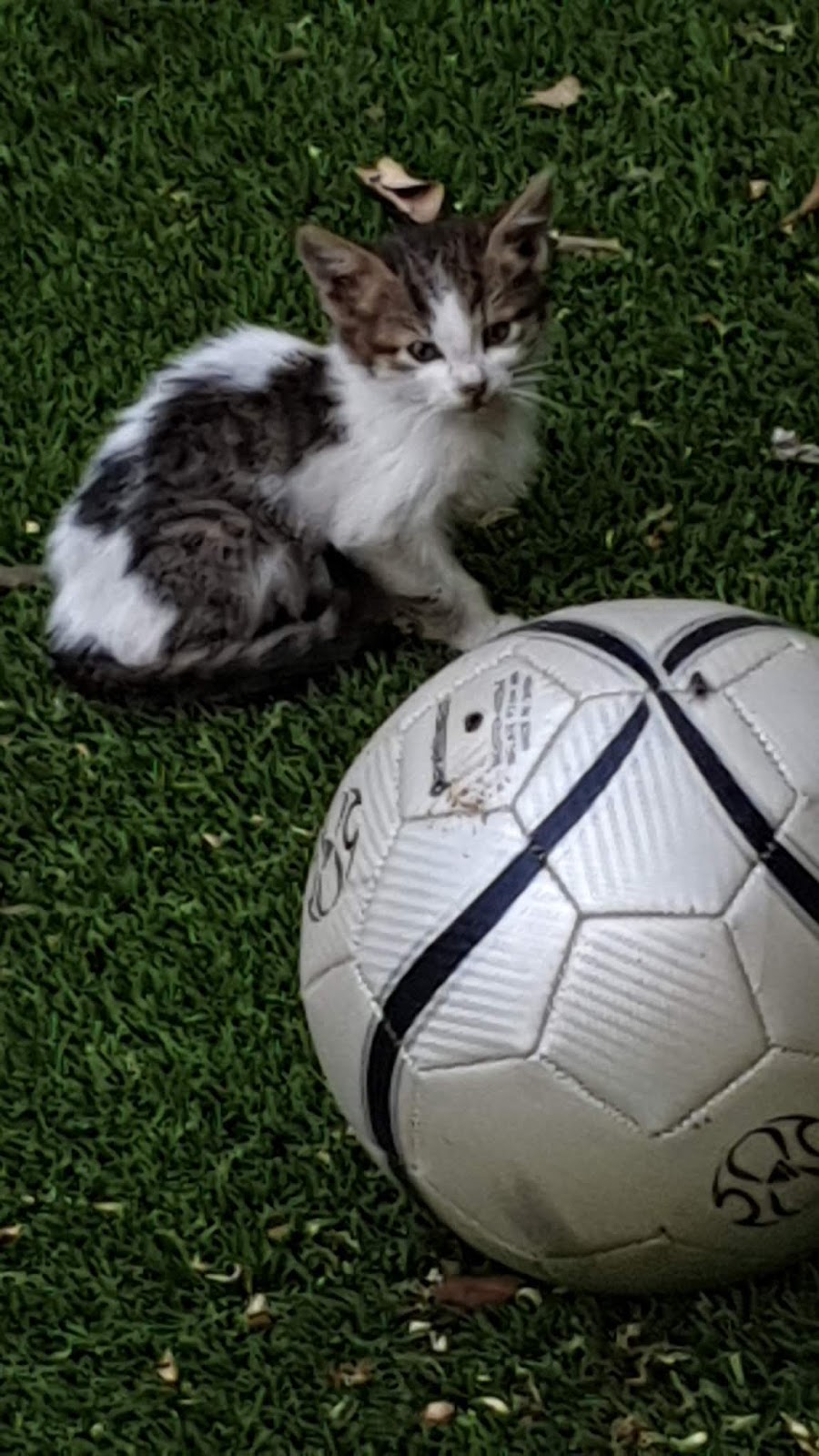
And of course, as Spring has sprung, the Real Cats of Israel are also out and about. This feisty little kitten is trying her paws at soccer:


Happy Reading!


Friday, May 11, 2018

The International Writers Festival 2018

I ventured into Jerusalem on a beautiful May afternoon, and I was on triple duty. I went to attend one of the sessions at the International Writers Festival. Since it is held at Mishkenot Sha'ananim, I was able to do a test run on a new book by Tali Kaplinski Tarlow, ScaVentures Jerusalem: The Experiential Guidebook.  I also got to have coffee with one of my favorite authors, Anna Levine.

Tali was nice enough to answer a few questions. Originally from South Africa, she " came to the tourism industry from the world of education having been a teacher, curriculum developer and informal educator for around 20 years" before she founded Israel ScaVentures.  The first tour game was the Nachlaot Scavenger Hunt, and from the outset she applied her “ScaVenture method”, and it brought a fresh approach to learning the story of a neighborhood in an experiential way. A ScaVenture can take around 50-100 hours to prepare, it involves extensive historic research, interviewing people, perhaps going on a tour or two, going into the area and getting lost (her favorite part), figuring out the unique story that the area needs to tell and writing up the material in a way that gives the area it’s voice. Tali will integrate the roles of the group members, which is a way of engaging each person directly with the area and the experience.  There is a tab on the website for "proposal." I thought it was where you could "propose" a potential tour, but it's actually a very cool and romantic way that couples get engaged -- looking for clues, and "popping the question" at the appropriate moment.

I reviewed the guidebook before I took the bus into town. There are five routes to explore: the Old City, the First Station, Machane Yehuda, Har Herzl National Cemetery, and Mishkenot Sha'ananim/Yemin Moshe.  After reading a little bit about the history of Jerusalem and how to use the book, I went to the appropriate pages of the book, which is color-coded for each route. Each chapter includes a short introduction, preparation tips, directions to the area via public or private transportation, loads of information about what to see, and lots of places to record thoughts or attach photos later one. Over 30,000 people have participated in ScaVentures.  For more information, you can visit the website. So....off we go!

Since I was on my own, I played all the suggested ScaVenture roles: tour guide, mission manager, prophet (the reader of biblical verses, quotes and other important primary sources), navigator, and detective (also the photographer). Mishkenot Sha'ananim means "peaceful dwellings," but the neighborhood was originally named the Courtyard of Judah Touro, since he provided the funding for the new neighborhood. But the area is closely associated with Moses Montifiore, who arranged to buy the land and built the famous windmill to grind wheat (which didn't quite work out, but that's a whole 'nother story).

The area is still quaint and quiet and includes an auditorium where cultural events are held and a music school. I was able to visit the Windmill and "the short building," which are just two of the eight stations included in the guidebook, but I am anxious to return and explore more of the sights.


Meeting with Anna Levine is always a pleasure, especially in a secluded little cafe. We talked about her two books that are coming out in the near future:  Scout's Honor, a PJ Library Our Way pick about a trip to one of the many caves in Israel (about 15 minutes from where I live!) where bravery and quick thinking will come into play. Then there's All Eyes on Alexandra (Kar-Ben, August 2018), the story of a migrating crane that can't quite stay in the "V formation." Anna went to a writing workshop "inspired by biblical heroines."


I attended "Saving Anne Frank Exhibition Opening and Conversation between Author Ari Folman, Graphic Illustrator David Polonsky, and Deakla Keydar." The title reminds of  a stupid library question: "Who wrote The Diary of Anne Frank?". Ari Folman is the editor of this edition, but an ingenious one. He and Polonsky worked together on Waltz with Bashir, the 2008 Oscar-nominated film where "an Israeli film director [Folman] interviews fellow veterans of the 1982 invasion of Lebanon to reconstruct his own memories of his term of service."

Quite frankly, I have seen many versions of the diary, and so many books about Anne and her family, including graphic novels, that I was skeptical of "the graphic diary." But I was totally blown away by this project. Ari Folman painstakingly went through the entire diary and changed it from prose to conversations. David Polonsky did an amazing job with the graphics, creating detailed and nuanced images of everything from the neighborhood in Amsterdam to the personalities themselves, based on their photographs. This is a graphic novel that has bite and humor and puts the "graphic" in graphic novel with creative layout and great use of color and text bubbles.

Even more interesting, is that the Anne Frank Foundation allowed this version to be published. All of Anne's unkind comments about her mother are included and laid out "graphically," with a scene depicting Anne as uncaring if her mother should die. The "lady parts word" is also included. This is not a comic book, and both editor and illustrator stressed that even though Anne wrote the diary when she was twelve to fourteen (until the family was caught in hiding), it is not a book for children. They also spoke of putting a lot of the content in context, one has to know that a panel with the inhabitants of the Secret Annex dreaming of different foods is taking place during wartime and rationing and in hiding.

Anne Frank's Diary: The Graphic Adaptation (Pantheon) will be available in English on October 2, 2018.


I saw some "Real Cats of Jerusalem" before I took the bus home:


Happy Reading!

Tuesday, May 20, 2014

Another Literary Day in Israel

I recently traveled to Jerusalem and enjoyed two book and writing-related meetings.  It was a little sad to have to return home early and miss the goings on at the Jerusalem International Writers' Festival, which took place May 18th through the 23rd, and was "a week of conversations between Israeli and guest authors, panel discussion and workshops, literature and film including events for children and a celebration of the poet Yehuda Amichai, all hosted by Mishkenot Sha’ananim."

My first stop was at Tmol Shilshom, a favorite cafe located in a courtyard near Jaffa Road.
The "bookstore-cafe-restaurant" takes its name from a novel by Nobel Prize winner S.Y. Agnon.  After a bracing cup of coffee,
it was time to work out at the Writing Gym.  Judy Labensohn served as trainer for this session, but she will be alternating with award-winning journalist Ilene Prusher in the weeks to come.  What is a Writing Gym?  It's where you give your imagination and your writing skills some exercise.  Judy provided three writing prompts, and the group considered each topic and wrote - either by hand or on a computer.  As someone who aspires to write, but never takes the time or gets sidetracked by the baskets of laundry, this was a welcome opportunity to get in the habit of writing something every day.  Some of the participants read their work, and it was really interesting to see how different people approached the topic.


From there I took the cross-town bus to Talpiot, where I met with Tzvi Maurer of Urim Publications.  This publisher is mostly known for excellent non-fiction and biography, but I heard about a new work of fiction.

The Mystery of the Milton Manuscript by Barry M. Libin.  It is "the story of Keith Jessup, a PhD student at Oxford, whose professor is murdered before delivering a lecture disclosing Milton’s own explanation of Paradise Lost. In his stead, Keith takes up the quest to find the Milton Manuscript and finally unravel the meaning of the epic poem. The scholarly hunt proves perilous as he discovers a plot to conceal the manuscript. Why? What could it contain that would spark such fear and murder over the centuries?"


After seeing some "Real Cats of Israel,"  I returned home to my baskets of laundry.


Happy reading!