Sunday, April 7, 2019

Passover 5779

Because this year is a leap year on the Jewish calendar, Passover is relatively late this year, beginning on Friday night, April 19th. As with almost all Jewish observances, there are customary foods and family favorites.  

Haroset

Haroset is that mixture of fruit and nuts on the Seder plate in which we dip the bitter herbs.  In Haroset: A Taste of Jewish History (The Toby Press, 2019), Dr. Susan Weingarten "attempts to solve the riddle of the origins of haroset -- when and why it appeared, what it was made of and how it changed over the generations." Dr. Weingarten is an archaeologist and historian and has published many scholarly papers about the history of food. Full disclosure: what I thought would be an academic discourse (boring) is a fascinating exploration of both Jewish sources and cultural influences. As Weingarten explains in the introduction:


Haroset has always been something of a mystery. It was not one of the three original symbolic foods eaten at the first Passover in Egypt. It first appears in the Mishna, but with no explanation of why, and with few details of what it was made of or what it tasted like. The [Babylonian and Jerusalem] Talmuds tell us that haroset was said to resemble the mud or clay for the bricks made by the Children of Israel as slaves in Egypt, so it was clearly connected to the story of the redemption from an early stage, but we do not know when it arrived at the Seder. It seems to have been introduced to counteract the bitter herbs, which have been part of the Passover meal since the time of the Exodus. 
I learned that many ancient cultures using dipping sauces to offset the tastes of other foods. Ashkenazi Jews pretty much use the same basic recipe -- apples, nuts, wine, cinnamon, and all the ingredients have deep symbolic meaning. Sephardic Jews enjoy a variety of recipes, varying from community to community and depending on the fruits available in the spring. Some groups even "add a small amount of clay or scraped brick" into the mixture. History also influenced the development of haroset, as red wine used to be added at the Seder table, but the practice was discontinued in Europe because of blood libels. Communities often made a huge batch that was distributed to all the families. 

Most recipes are not exact; the important thing is that the consistency should be thick, like mortar. Sephardim often cook the mixture, and grinding the mixture is an important part of the process for all cultures. 

Want to add an interesting taste to your Seder? Try "Zoya Leviva's Haroset from Uzbekistan:"


black raisins
almonds
red wine
optional: walnuts

©The Toby Press and Dr. Susan Weingarten, 2019. Used with permission.

Passover Baking

Paula Shoyer is known as "the Kosher Baker," and she is an expert on the history of Jewish cookbooks. She is also the author of four cookbooks: The Kosher Baker (Brandeis University Press, 2010), and three from Sterling Epicure: The Holiday Kosher Baker (2013), The New Passover Menu (2015), and The Healthy Jewish Kitchen (2017). For Passover, she is sharing some recipes for the holiday that those who eat "keto"will also enjoy.

For those who have been living under rocks, the keto (ketogenic) diet is protein rich, high fat, low carbohydrate plan of eating. The diet has been suggested for children with epilepsy, those with neurological disorders, those on the spectrum, and Parkinson's Disease patients. Those who work out frequently have also embraced the keto diet. Since so many carbohydrates are either chametz or kitniyot (grains, beans, and soy that Ashkenazi Jews do not eat on Passover), you can literally have your cake and eat it, too, as the baking ingredients for her desserts include coconut oil, almond flour, and quinoa.

Lemon Quinoa Cake   - PAULA SHOYER
Serves 12
PREP TIME: 20 minutes BAKE TIME: 15 minutes to cook quinoa, 65 minutes to bake cake ADVANCE PREP: May be made 3 days in advance or frozen

CAKE
¾ cup quinoa
1½ cups water
Cooking spray or 2 tablespoons oil
2 tablespoons lemon zest, from 2-3 large lemons
½ cup fresh lemon juice, from 2-3 large lemons
4 large eggs
1 teaspoon pure vanilla extract (or other vanilla if for Passover)
¾ cup coconut oil
1 ¼ cups sugar
1 cup almond flour
¼ cup coconut flour, plus 2-3 tablespoon to dust bundt pan
2 teaspoons baking powder
1 teaspoon baking soda
½ teaspoon salt

Glaze
1 cup confectioners’ sugar
2 tablespoons fresh lemon juice (from 1-2 lemons)

Place the quinoa and water into a small saucepan and bring it to a boil over medium heat. Reduce the heat to low, cover the saucepan, and cook the quinoa for 15 to 18 minutes, or until all the liquid has been absorbed. Let sit for 5 minutes off the stovetop. The quinoa may be made 2 days in advance and stored in the fridge.

Preheat the oven to 350°F. Use cooking spray or oil to grease a 12-cup Bundt pan. Sprinkle 1 to 2 tablespoons coconut flour, or more if needed, over the entire greased pan and then shake the pan all around to cover and then tap out the excess.
Place the quinoa in the bowl of a food processor. Add the lemon zest and juice, eggs, vanilla, oil, sugar, almond flour, coconut flour, baking powder, baking soda and salt and process until the mixture is very smooth, about 2 minutes.
Pour the batter into the prepared Bundt pan and bake it for 1 hour, or longer, until a skewer inserted into the cake comes out clean.

Let the cake cool for 30 minutes and then remove it gently from the pan onto a wire cooling rack.
Recipe by Paula Shoyer 
used with permission

As a responsible reviewer, I tried this recipe, and...
I am not a big fan of coconut, which came through more than the lemon for me. But, the cake is super easy to make, there are no weird ingredients that are not available during Passover, it does not require tons of eggs that have to be separated, and it was gone in less than 24 hours, so somebody enjoyed it very much.  Further proof is that my cake looks similar to the promotional picture of Paula's.


For more about Paula Shoyer, super colleague Heidi Rabinowitz spoke to her at the Limmud Conference in Boca Raton, Florida in December, 2018, and you can hear their conversation at Heidi's podcast - The Book of Life.

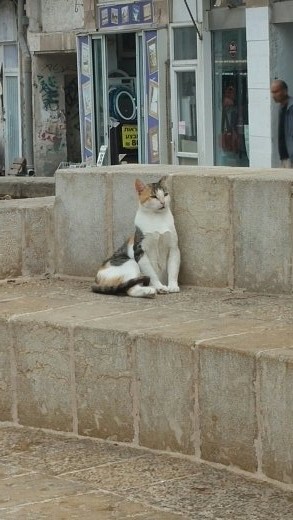
The Real Cats of Israel are enjoying the spring weather:
People watching at the Central Bus Station in Jerusalem
Chag Kasher V'Sameach!
A Happy and Kosher Passover!
Happy Reading!

Saturday, March 9, 2019

Adar and the Future of Happiness

It's that time of the year:


משנכנס אדר מרבין בשמחה

When the month of Adar arrives, we should increase our happiness [joy] (Talmud, Taanis 29a).

So this month, we look at some aspects of happiness in our quest to increase it.

We learn so many things when we read -- more than the contents of a book. As Anna Quindlen said, "In books I have traveled, not only to other worlds, but into my own.” In reading about the future of happiness, I took some side trips into copyright law, positive psychology, genetic engineering and technology.  

First, an interesting note on copyright law. Book titles cannot be copyrighted. Series titles can have a trademark, but book titles cannot. Personally, I would try for a unique title so that my book would not be confused with anyone else's. But it is entirely possible for different people to think up the same title, though they be separated by borders, language or culture. I know of one case where the book first appeared as a weekly serial in Mishpacha Magazine -- Gila Arnold's Learning Curve. When the time came to publish, another book had already been released with the title. The publisher changed the title slightly of Gila's to It's a Learning Curve (Menucha 2018), so that people could differentiate between the two.

The first time "The Future of Happiness" appears is in an essay by Mihaly Csikszentmihalyi (bonus points for pronunciation) that first appeared in the collection The Next Fifty Years: Science in the First Half of the Twenty-first Century (Phoenix, 2003). Csikszentmihalyi is a Hungarian American psychologist best known for his book Flow (Harper and Row, 1990), where he explains his theory: people are happiest when they are in a state of flow—a state of concentration or complete absorption with the activity at hand and the situation. It is a state in which people are so involved in an activity that nothing else seems to matter. 

In this article, he talks about controlling the genetic makeup of human beings, and what traits and characteristics they could want included in their children's genetic makeup. Csikszentmihalyi asserts that "it is most likely that the most intense selective pressure will be for producing happy children...they understand that while every other good is a means to an end, happiness is THE good in itself: it is what we hope to achieve through education, money, beauty, and intelligence." Csikszentmihalyi did a study and among the things he learned was that "people who are engaged in challenging activities with clear goals tend to be happier than those who lead relaxing, pleasurable lives. The less one works just for oneself, the larger the scope of one's relationships and commitments, the happier a person is likely to be." He discusses how the individual's measure of his own happiness is a valid assessment, and how although happiness can be subjective, there are definitely objective standards or definitions. Will scientists use genetic engineering to "program" people to be happy? The question is still being debated. 

Amy Blankson's 2017 book also outlines The Future of Happiness (BenBella Books). Many people are concerned that we are so technology dependent, or addicted, based on your perspective. How can you utilize technology without letting it take over every aspect of your life. "By keeping happiness, meaning, and joy as the true North, Blankson provides a much clearer calculus for which technology to use, where to use it, and when to find safeguards against it." 

After addressing "The Three Burning Questions of the Digital Era:"
  • Where Are We Heading?
  • Would We Be Better Without Tech?
  • What Will Happiness Look Like?, 
she discusses "Five Modern Strategies for Balancing Productivity and Well-Being in the Digital Era:" 
  1. Stay Grounded - to focus your energy and productivity
  2. Know Thyself - through app-driven data to strive toward your potential
  3. Train Your Brain - to develop and sustain an optimistic mindset
  4. Create a Habitat for Happiness - to maximize the spaces where you live, work and learn
  5. Be a Conscious Innovator - to help make the world a better place.
Holding the hardcover book, I realized that many of the people who should be reading it probably don't deal with such low tech and would have to get an e-book or an app for their device. No worries, Blankson suggests plenty of apps to put you on the road to happiness, and the book is a quick and interesting read.

The latest title comes from Mosaica Press: The Future of Happiness (2019), which invites the reader to "discover how to bring happiness to our homes -- and ourselves."  It is authored by Rebbetzin Faige Twerski. It is obvious why she attracts such a cult of personality. She is warm and wise. She speaks of the glory of Hassidic dynasties and of making one's relationship with her husband a priority.


This is the latest collection of articles the Rebbetzin wrote for her weekly column in Ami Magazine. She says there are three primary relationships that bring us happiness: between me and the Almighty; between me and my soul; and between me and others. In this sense, her life experience supports Csikszentmihalyi scientific findings that a person with a larger scope of relationships and commitments will be happier. Rebbetzin Twerski asserts that "the future of happiness, as I see it, will be a world stripped of the many illusions that divide us and distance us from one another. It will be a world where we can drop the many masks we wear and be real people, free of the barriers, agendas, and aimless pursuits that separate us and deprive us of the recognition that we are truly one." Her previous published pieces are organized under several headings, including "Easy versus Happy," "Happiness versus Control," and "Positive Attitude." The reader will enjoy anecdotes about people whom the Rebbetzin met or counseled, as well as stories about her family and friends. Extremely Torah-based with lots of quotes from Psalms and famous rabbis, Rebbetzin Twerski's faith and tradition are obvious, but the distillation of these qualities into common sense and practicality for the common reader are quite impressive. Although not a big fan of collections of advice columns, these are some gems: "We, who are the bearers of a Divine neshamah (soul) and given the power of bechirah (free choice), the ability to will our lives, are charged to rise above the past and move confidently to the future, to claim our full, holy potential and personal destiny. Guilty feelings don't lead to happiness. By accepting accountability for our lives, and mistakes, we lay the foundations of true happiness." 

I met this Real Cat of Israel on the beautiful yishuv of Tekoa, hometown of the biblical prophet Amos, who prophesied about the future of happiness when "I will return the captivity of My people Israel, and they will rebuild desolate cities and settle them; they will plant vineyards and drink their wine; they will cultivate gardens and eat their fruits. I will plant them upon their land and they will never again be uprooted from their land that I have given them, said the Lord, your God" (Amos 9:14-15).


Happy Reading!

Tuesday, February 12, 2019

It's Time for...


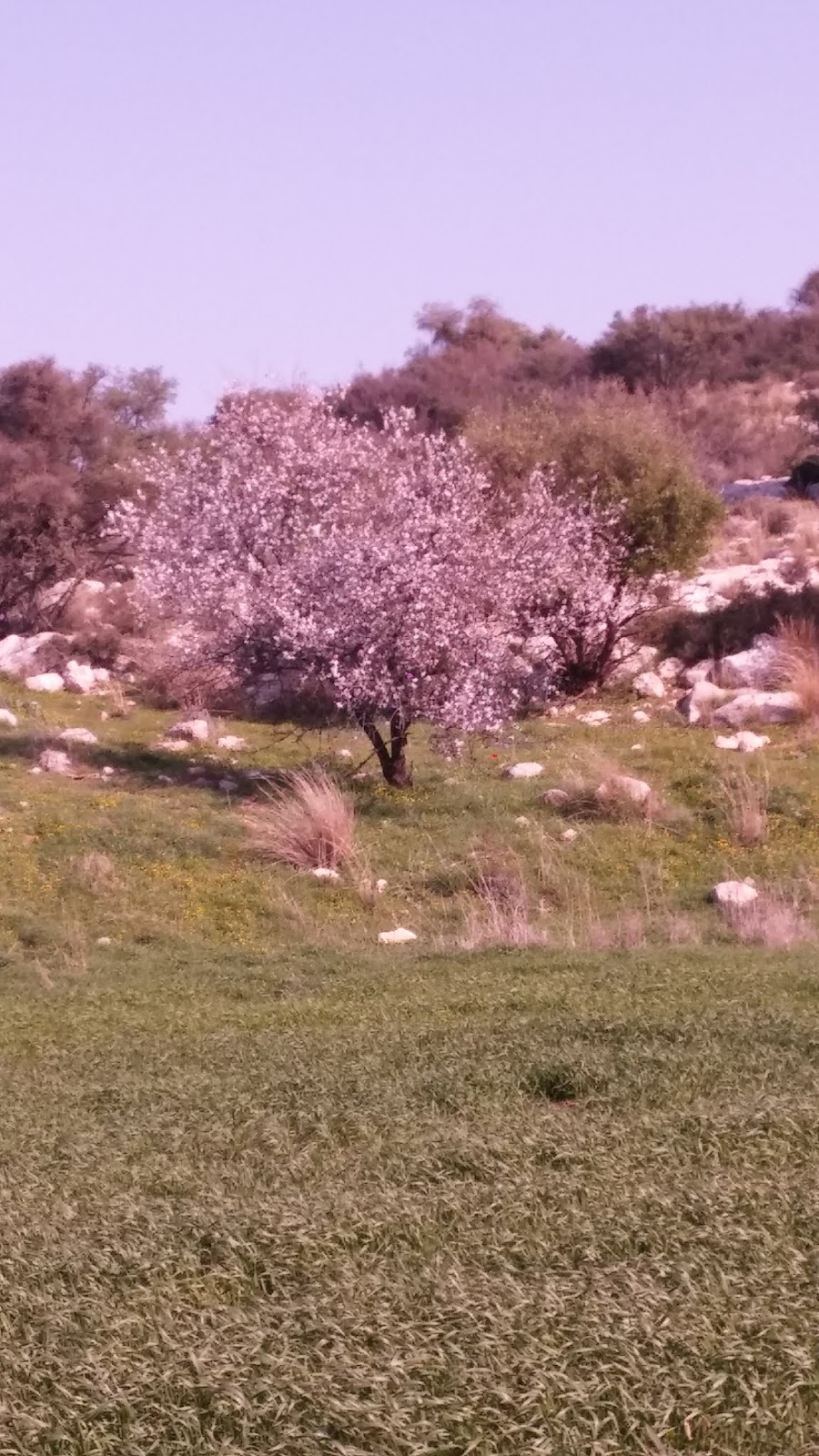
Here in Israel, we recently celebrated Tu B'Shevat, the almond trees are in bloom , and Spring is right around the corner, which means two things


IT'S ALMOST PASSOVER!!!! 

and

It's almost tax time - time to think about finances


Graphic Novel Format Haggadah

Koren, in the tradition of "the rich legacy of illuminated manuscripts," has recently published

PASSOVER HAGGADAH GRAPHIC NOVEL


The team of Jordan B. "Gorf" Gorfinkel, Erez Zadok and David Olivestone have created a clever and colorful Haggadah that will enhance any Seder. The varied formats means that turning the pages uncovers new surprises, from the Venn Diagram-like picture illustrating the four types of children, the panels of the Ten Plagues (and Pharaoh's hard heart), the cumulative counting of "Who Knows One," and the page showing poses with everyday items and then with Jewish artifacts. Diversity is also evident (if you didn't notice, it's four types of children, not just sons), with an eclectic group gathered for the "Ma Nishtanah" and Jewish experiences like the Ethiopians making Aliyah and a secret Seder in the former Soviet Union.

There is a lot of information about symbolism and customs, and the "to do" items for the Seder are depicted in blue and white "pop ups," with Father Goat explaining the procedures to his Daughter Goat. My favorite is when it's time to eat the bitter herbs.

©2019 Koren Publishers. Used with permission.


Could the graphic novel format be the modern-day version of manuscript illumination? I think it could:

Kaufmann Haggadah - 14th Century
IWEN Corner

Two of the ladies recently featured here belong to a group called IWEN - the Israeli Women Entrepreneurs' Network. These female business owners in Israel are providing all kinds of good and services. More than that, they are helping their fellow IWENs by offering suggestions and moral support. It turns out many of the members are involved in book-related endeavors, so a new feature at Life Is Like a Library will highlight some of these ladies.

First up, Debbie Sassen. She is a financial advisor. A former investment banker, and the mother of eight, this lady has the experience and insight to help those who might be nervous about taking charge of their finances and investing. We recently met and talked about her soon-to-be available (April) book The $1K Investor: Simple, Smart Steps to Start Investing with $1K or Less (self-published, 2019).


With a minimum of financial jargon, a discussion of the benefits and drawbacks of specific financial instruments is followed by Sassen's  four-step process, which starts with defining specific goals, evaluating risk, deciding on the mix of your portfolio, and deciding if you want to do it yourself or work with an advisor. She goes on to address myths and mistakes, then provides some suggestions for getting started.

She generously answered my many questions about the book and personal finance, and she emphasized the value of starting small. It's less scary, and it can eventually become fun. For those who are afraid of losing money, she gives the great example of buying a pair of shoes that were tight, and that you hoped would stretch out. Think of a $100 loss the same way. I had the misconception that everybody is pretty much the same when it comes to investing, and while there are rules of thumb, Debbie set me straight that there is no cookie-cutter approach -- everyone has different goals and different issues.

Debbie works with more than just the numbers. She does a lot of coaching and energy work, and for those who are open, she talks about God, trust and faith. One of the issues she discusses in the book is being comfortable with what you're doing and being confident that your advisor makes your interests a priority. Her book will definitely help the small investor with their decisions.

Thank you to Debbie. If you are interested in the book, or in connecting with her, please visit her website: https://debbiesassen.com/


And, one of the Real Cats of Israel, Toxy, is very excited about the lemons harvested from her backyard:

Happy Reading!


Sunday, January 6, 2019

A Catalog of Librarians

They say "birds of a feather flock together," whether it be a host of sparrows, a chattering of starlings, a murder of crows or a pandemonium of parrots. 

What do you call it when there is more than one librarian? Some have suggested a shush, a volume, a stack or an answer, but I liked a catalog better. So why did I need to know what a group of librarians is called?


Because I was very excited to meet a former librarian. She managed a very small collection, and a recent Sydney Taylor Book Award winner is based on her story.  Yes, people, I met


THE LIBRARIAN OF AUSCHWITZ


Dita Kraus lives in Israel, and I was thrilled that when I contacted her, she graciously allowed me to visit. I don't think I had a lot of expectations about meeting her, but I had a lot of questions, most of which were answered by, "it is a work of fiction based on my experiences." But her experiences were amazing. If you haven't read the book, Dita did not even know she was Jewish until the Nazis invaded Czechoslovakia. Her family was deported to Terezin, where she was in the chorus of the opera Brundibar. She took painting lessons with Friedl Dicker-Brandeis.


From Terezin, her family was deported to Auschwitz, where they were assigned to the family camp in Birkenau. It was there, as a fourteen-year-old, that Dita was assigned to be an assistant in the children's "school," and given the responsibility of taking care of "the library."  She would keep track of who "checked out" books and she would hide the books at the end of the day. She did not know what I imagined a library in Auschwitz would look like, so she shared the picture below that she drew: 

After the Holocaust, Dita returned to Czechoslovakia. She also reconnected with Ota Kraus. He was one of the counselors in the children's camp, but Dita and he did not really interact because he was much older than she. They married and moved to Israel in 1949. In the book, there is a beautiful speech by Fredy Hirsch about making aliyah. Since she and her husband had known Hirsch, I asked about his impact on their decision to move to Israel. Dita told me that her husband was a Zionist, and it was his decision to move. They taught English at a boarding school for 29 years and had two sons. 
Otto (Ota) Kraus


Ota (Otto) died in 2000. He published several novels: Land Without GodMountain Wind, Tel Kotzim, and The Dream Merchant and Other Galilean Stories. I picked up a copy of The Painted Wall, Ota Kraus' "literary adaptation" of events that happened during the war. In his book, Dita is known as "Dasha," and "shepherds" H.G. Wells' A Short History of the World, Elemental Geometry for High Schools, a French novel, a Russian grammar, an outdated atlas, and "three quarters of a 19th century Czech village novel."
Dita speaks Hebrew, English, Czech and German. She is still quite active -- visiting Prague twice every year, speaking to classes about her experiences, maintaining correspondence and selling her late husband's books. She has recently written her own memoir (in Czech), and she continues to paint. I picked up a print with two of my favorite flowers -- sunflowers and anemones (calaniot).


So, on the one hand, it was such an honor and pleasure to meet Dita. I don't think she understood how emotional it was for me, especially after reading about her and learning about her life story. On the other hand, I think I learned an important lesson about romanticizing the Holocaust. Dita was happy to talk about her painting and the locations of the camps, she did not talk about any of the horrors. While her children were exposed to the Holocaust because most of the Kraus' social circle were survivors, they only talked about people and places, never details about the atrocities. 

No Real Cats, but something equally great - after I visited with Dita, I drove a little farther up the highway and bought some cheese and freshly picked strawberries - the completion of a great day.


Happy Reading!

Saturday, December 1, 2018

Yet Another Beautiful Day in Israel

One of the great things about Israel is that so many diverse people and cultures come together, and that so many interesting things are readily accessible for reading, sightseeing, and buying. Like myself, the awesome creative women below are immigrants. They are using their talents in different ways to enrich the lives of others, so thank you ladies!

As the weather in Israel turns cold and rainy (which is a good thing), I look forward tackling my TBR (to be read) pile. There has been a lot of buzz about The Sisters of the Winter Wood by Rena Rossner (Orbit, 2018).  Dubbed a "Jewish fantasy book," I was skeptical because I am NOT a fan of fantasy, and I have yet to see a Jewish book in the genre that fully develops the fantasy aspect. I was very pleasantly surprised to find that the Jewish content is such an integral and interesting part of the story, and that the fantasy aspect (no spoilers, but there are a swan and a bear on the cover) is also interesting and developed nicely, On top of that, I loved the "YA" aspect of two sisters who are growing and changing and coping with their relationship with one another, "boy problems," and the bigger issues of threats to their community.


I originally reviewed  ScaVentures Jerusalem: The Experiential Guidebook in the September/October 2018 edition of the Association of Jewish Libraries Newsletter. I had the pleasure of meeting its author, Tali Kaplinski Tarlow, in person recently. I had noted that "the book can be used in family or groups, and while appropriate for all ages, planning and executing any of the 'missions' would be an amazing experience for a bar or bat mitzvah trip. If one is not able to visit in person, it is an invaluable resource for teaching and learning about Jerusalem in an innovative and exciting way." I have found yet another way to use the book. Since I travel to Jerusalem pretty frequently, I have been doing "mini-missions:" reviewing the book before I hop on the bus, and picking one or two things to learn about and find. Recently, I looked at Route 4 - The Many Faces of Shuk Machane Yehuda - Beauty in Diversity, and look what I found:

See Page 109 to find out what this is!
Yes it is legal, and we love it in Yemenite Soup.


Not a book, but a great accessory for librarians and teachers that is made in Israel. This apron is from the Tracy Lipman Collection, and while Tracy originally created one for herself to use at vendor events and at flea markets, etc., it works well in the library and classroom for holding pens and note paper, scissors, change for the copy machine, etc.


And of one the Real Cats of Israel is worn out after a busy day: 


Happy Reading, Touring, and Shopping!

Sunday, November 11, 2018

Follow My Lead

"Leadership" is yet another buzzword that gets tossed around frequently. What does it mean to be a leader? What if you don't have a "leader personality?" And in these turbulent times, what can we learn about leadership that we can use in our daily lives?


If you're a migrating bird, it's important to stay in formation and follow the flock. But when you're not so good at following directions, maybe it's not because you have executive function issues (yet another buzzword, this one for parents, which is a whole 'nother discussion), but because you are meant to be a leader. Such is the case in Anna Levine's wonderful All Eyes on Alexandra (Kar-Ben, 2018). Chiara Pasqualotto's beautiful illustrations show a crane who is curious about volcanoes and waterfalls. But Alexandra can sense when the weather changes, she has studied the wind, and she is "never afraid to try new things." Her Saba (grandfather) decides she is ready to lead the flock to Israel, which she does with (sorry for the pun) flying colors.  

At a stall in my professional life, I started reading Parker J. Palmer's Let Your Life Speak (John Wiley & Sons, 2000), a collection of short essays about "Listening for the Voice of Vocation." It talks about leadership as "a concept we often resist. It seems immodest, even self-aggrandizing, to think of ourselves as leaders." But he has come to understand that we "lead by word and deed simply because we are here doing what we do." This seems very deep and encouraging, but much like when a tree falls in the forest and no one is around, or like blogging away in cyberspace, I am leading if no one is following? 


Erica Brown has focused on Jewish leadership. Her Inspired Jewish Leadership: Practical Approaches to Building Strong Communities (Jewish Lights, 2008) explores Jewish leadership through “ancient models of Jewish leadership, contemporary professional business literature, and Jewish texts.” Her Leadership in the Wilderness: Authority and Anarchy in the Book of Numbers (Maggid Books, 2013) delves into the fourth book of the Bible. It highlights the development of Moses' leadership, from his own attitudes, to environmental challenges while wandering in the desert, to defiance from Korach and his group, and threats from Bilaam and the Midianite women to the Israelites' very existence. These show how Jewish leaders are made: “Discover yourself in the wilderness of a future you know not. Go outside to go inside. Grow where the wild things are. Learn from that which almost kills you. Leave the past and discover God.”


Obviously Moses was not the only biblical leader. In another Maggid (2015) book, Rabbi Lord Jonathan Sacks writes about Lessons in Leadership. In one of my favorite format, Rabbi Sacks, "mines the weekly Torah portions for insights into the nature of power, authority, and leadership. Based on the understanding that no man is born a leader, the book explores the principles, and perils, of becoming one." One reviewer gushed that "These essays take everything to a whole new level; personal responsibility, moral responsibility, human responsibility, collective responsibility. People often ask why I do what I do, and so far this book is giving me a framework to attempt to explain." It is also interesting that so many reader reviews on Amazon mention its relevance to non-Jewish readers and teachers.


Brene Brown's latest book is Dare to Lead (Random House, 2018). Known for one of the most popular TED talks of all time about the power of vulnerability, she researches and writes about being brave, taking risks, and really connecting with other people. Although it builds on her other books, this one stands on its own in terms of content. And there is a hub on Brown's website with nine ways to engage in the "Brave Work," including downloads, finding certified Dare to Lead facilitators, and schedules for a team or organization read-a-long. 


And, of course, the Real Cats of Israel follow their own lead:


Happy reading!

Tuesday, August 7, 2018

Elul 5778

Another year has flown by, and it seems that the more books I read, the more there are that I want to read. I see that my reading tastes are changing: I no longer have the patience for the flowery details of literary fiction, nor anything sad.  But I still read a lot of non-fiction, both Jewish and secular, about character development and thinking and acting more kindly.

This year's Elul reading list has quite of mix of books:

It is customary to read Pirkei Avot (Ethics of the Fathers) during the long Sabbath afternoons between Passover and Rosh Hashanah. For those who have been doing this for a while, it's sometimes nice to change it up with a new translation or edition. For those who want to be totally blown away and see these verses of the Mishnah brought to life, run and get a copy of The Illustrated Pirkei Avot: A Graphic Novel of Jewish Ethics (Print-O-Craft Press, 2017). Jessica Tamar Deutsch's work is so creative and upbeat that the ancient text gets its due as the timeless work it is. Okay, one of the first pages with the "Featured Sages" have them looking a little like a collection of owls, but the historical dates are very useful. As I like to say, the rest of the book "utilizes the graphic novel format to its fullest," with double- and single-page spreads, boxes, comic panels, clouds and speech bubbles. "Evil" makes its appearance several times as a spiky little (or big) creature.  Here's one of my favorite verses - Chapter One, Mishnah Seven:

©2017 by Jessica Deutsch.  All rights reserved. Used with permission of Print-O-Craft Press.

  I found my copy at the Israel Bookshop in Brookline, Massachusetts, but it can also be ordered through the publisher. Because there are several cycles, I anticipate enjoying the book for at least one cycle of every summer.


Repentance: The Meaning and Practice of Teshuvah by Dr. Louis E. Newman (Jewish Lights, 2010) is a great book on the subject for those who really want to understand the process of repentance and make change. Newman draws on classic sources like Rav Soloveitchik's  On Repentance and Rav Kook's Lights of Penitence. He quotes non-Jewish sources, and adds his own insights: "Through the process of teshuvah we evolve morally, becoming the sort of people who can no longer conceive of falling back into the old patterns of misconduct that characterized our past." Although a little over 200 pages, a careful reading, with time to absorb the ideas and approaches, will take some time. This book is highly recommended to those who are looking to identify patterns and break them.


Sarah Knight's book title may off put some, but The Life-Changing Magic of Not Giving a F**k (Quercus, 2015) is a straight-forward approach to using your time more efficiently. Much like The Life-Changing Magic of Tidying Up: The Japanese Art of Decluttering and Organizing by Marie Kondo (Ten Speed Press, 2014), and upon which Knight bases her method, if we are spending time doing things we don't want to do, we have to sort through our lives, get rid of the things we don't absolutely love, and fold the rest neatly for easy access. Obviously the book is filled with f-bombs, but it also reminds us of the famous words of Rabbi Hillel, "If I am not for myself, who will be for me? And if I am only for myself, what am I? and if not now, when?" (Pirkei Avot 1:14). Funny and full of examples, it will take some practice (and budgeting) to prioritize (translation: decide what things in your life are worthy of f**ks), but it really is life changing to politely reclaim your time.

I recently went to a retreat at beautiful Dor Beach (located between Hadera and Haifa), and I met the beautiful author of Heart 2 Heart Healing (self-published, 2016). Shira Chernoble is a pastoral counselor who studied under Elisabeth Kubler-Ross, and practices a unique method of healing that incorporates pastoral counseling, shiatsu massage therapy, and aromatherapy. Her book's subtitle is "Stories of Hurt, Healing and Hope in Coping with Chronic Illness and Death." I would not say this is a happy read, nor one I would pick it up off the shelf, but the stories of real people coping with challenges will give strength to those in similar situations.

Elul is a time to review the past year and think about changes for the coming year. So for me, it's a reminder of what one person can do to make a difference in the world, especially with grieving souls. Shira started the Neshama Project in 2014 to distribute a custom-blended therapeutic oil to "people grieving for lost family members or dear friends." For more information, Shira can be reached at neshama101@gmail.com.


Thank you to super colleague and friend Kathy Bloomfield for suggesting The Outlaw by Nancy Vo (Anansi Press, an imprint of Groundwood Books, 2018). The tag is that "the outlaw leaves behind a trail of misdeeds and then suddenly disappears. But one day, a mysterious stranger rides into town, and things begin to change." Although probably not considered a "Jewish book," the story is about repentance and making amends. The illustrations "were done with ink, watercolor and newsprint transfer on special paper, using newspaper clippings and fabric patterns from the 1850s and 1860s, and the text is set in the font commonly found on 'wanted' posters." The text and illustrations -- a dark scheme with splashes of color-- complement each other perfectly.

And finally, what can we learn from The Real Cats of Israel appropriate for Elul? Well, I found a great post at "Notes from a Jewish Thoreau" about Jews and cats. The Talmud states that dogs know their master, while cats do not. Cat owners figured this one out on their own. Elul is a good time to think about serving our Master, God, in all that we do, so, in this case, do not take the example of cats.

Happy Reading!

Best wishes for a happy and healthy New Year!